
 English
 한국어
한국어 Español


The built environment is currently responsible for approximately 39% of global carbon dioxide emissions, with embodied carbon in materials accounting for a substantial share. Against this backdrop, the shift toward timber as a primary cladding material represents more than an aesthetic preference — it is a scientifically grounded response to an urgent environmental imperative.
Sustainable timber cladding systems store carbon captured during the tree's growth, actively reducing the carbon burden of a building over its operational lifetime. When sourced from certified, well-managed forests, this carbon storage is part of a regenerative cycle rather than a one-time extraction, distinguishing timber from virtually every other mainstream cladding material.
Carbon Sequestration: Understanding Timber's Climate Advantage
Trees absorb atmospheric carbon dioxide through photosynthesis, incorporating carbon into their woody biomass. When timber is harvested and processed into cladding boards, this carbon remains locked within the material for the entire service life of the product — potentially spanning 50 to 100 years or more depending on species, treatment, and maintenance regime.
The carbon credentials of timber cladding become even more compelling when assessed against the alternatives. Life cycle assessments consistently demonstrate that timber cladding generates significantly lower embodied carbon than aluminium composite panels, fibre cement, or brick veneer — materials whose production involves energy-intensive manufacturing processes with substantial fossil fuel inputs.
For architects and developers seeking to demonstrate compliance with increasingly stringent whole-life carbon targets — including those embedded in frameworks such as RIBA 2030 Climate Challenge and the UK Green Building Council's net zero definition — timber cladding offers one of the few material-level interventions capable of delivering genuine carbon negativity at the building envelope.
Certified Sourcing: The Foundation of Genuinely Sustainable Timber
The sustainability credentials of any timber cladding product are only as robust as the forest management practices from which the raw material originates. Certification schemes provide specifiers with a verifiable chain of custody, linking the finished cladding board back to forests managed in accordance with rigorous ecological and social standards.
Forest Stewardship Council (FSC) Certification
The FSC is the most widely recognised international timber certification body, operating a comprehensive standard that encompasses biodiversity conservation, workers' rights, community engagement, and sustainable yield management. FSC-certified timber cladding provides architects and clients with the highest level of assurance that the product has been sourced without contributing to deforestation or forest degradation.
Programme for the Endorsement of Forest Certification (PEFC)
PEFC operates as an umbrella body endorsing national forest certification schemes that meet internationally agreed sustainability benchmarks. For projects in Europe and Australasia in particular, PEFC-certified cladding is widely available and represents a credible alternative or complement to FSC certification in supply chains where both may be offered.
Sustainable Forestry Initiative (SFI)
The SFI standard is primarily relevant to North American timber supply chains and is widely accepted by green building rating systems operating in that market. For international projects specifying North American timber species such as western red cedar or Douglas fir, SFI certification provides a recognised framework for responsible sourcing verification.
Principal Timber Species Used in Sustainable Cladding Systems
| Species | Durability Class | Sustainability Notes | Typical Application |
|---|---|---|---|
| Western Red Cedar | Class 2–3 | Widely FSC-certified; naturally durable without treatment | Residential and commercial facades, high aesthetic demand |
| Larch (European) | Class 3–4 | Fast-growing European species; abundant certified supply | Contemporary housing, education, and cultural buildings |
| Siberian Larch | Class 2–3 | Slow-grown, high-density timber; certified sources available | High-durability facades in exposed coastal locations |
| Accoya® (Modified Radiata Pine) | Class 1 | Acetylation uses FSC pine; non-toxic, biodegradable process | Long-life cladding requiring minimal maintenance |
| Thermally Modified Ash | Class 2 | Heat treatment without chemicals; enhanced durability | Contemporary facades, particularly in urban contexts |
| Kebony (Modified Softwood) | Class 1–2 | Furfurylation of FSC softwood; award-winning sustainability profile | Prestige residential and commercial projects |
The selection of timber species should be driven by a combination of durability class requirements, exposure category, design intent, and whole-life carbon assessment. Locally sourced species will generally deliver superior embodied carbon performance by minimising transportation distances, and should be prioritised where the supply of certified material is available.
Timber Modification Technologies and Their Role in Sustainable Design
One of the most significant advances in sustainable timber cladding over the past two decades has been the development of modification technologies that dramatically enhance the natural durability of fast-growing, plantation-sourced softwoods — eliminating the reliance on chemically treated tropical hardwoods, which carry considerably higher environmental and social risks.
Thermal Modification
High-temperature heat treatment (180–230°C) in the absence of oxygen permanently alters the wood's cell structure, increasing durability and dimensional stability without chemical additives.
Acetylation (Accoya)
Acetic anhydride reacts with the timber's hydroxyl groups, converting them to acetyl groups. The result is a Class 1 durable material that resists rot, insects, and dimensional movement.
Furfurylation (Kebony)
A bio-based liquid derived from agricultural waste is impregnated into fast-grown softwood under pressure, hardening the cell walls and achieving durability equivalent to tropical hardwoods.
SIOO:X Silicon Treatment
A pioneering Swedish treatment system that uses potassium silicate and silicon oil to protect timber surfaces, extending maintenance intervals to 10–15 years without film-forming coatings.
Charring (Shou Sugi Ban)
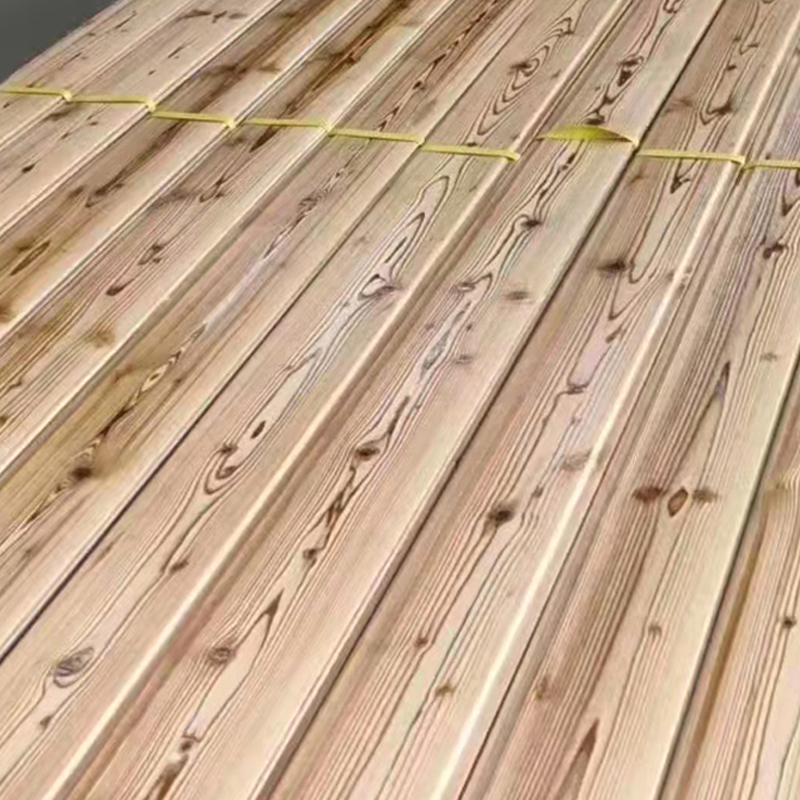
An ancient Japanese technique of surface charring that creates a carbonised protective layer on the timber surface, offering impressive durability and a distinctive aesthetic increasingly favoured in contemporary architecture.
Oil and Wax Systems
Natural hardening oils and wax-based finishes penetrate the timber surface to provide water repellency and UV protection, with low-VOC formulations now widely available for environmentally conscious specifications.
Cladding Profile Design and Its Impact on Building Performance
The profile geometry of timber cladding boards significantly influences both the aesthetic character of a facade and its technical performance in terms of weathering, drainage, ventilation, and maintenance requirements. Low-carbon building design increasingly demands that these two considerations be optimised simultaneously.
Open-Joint and Rainscreen Systems
Open-joint rainscreen cladding systems create a ventilated cavity behind the cladding layer, allowing moisture to drain freely and air to circulate. This dramatically reduces the risk of moisture accumulation within the cladding and substrate, extending service life and reducing whole-life carbon by minimising replacement frequency. Open-joint profiles have become a hallmark of sophisticated low-carbon facade design in the UK and Northern Europe.
Featheredge and Shiplap Profiles
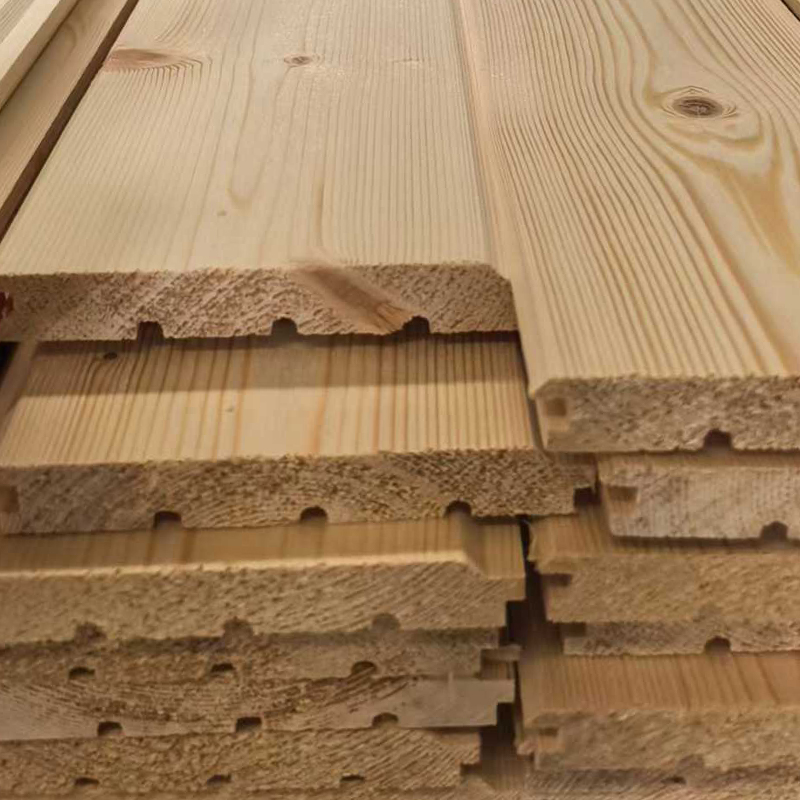
Traditional featheredge and shiplap profiles offer overlapping installation that sheds water effectively while providing a visually warm, textured facade surface. These profiles are particularly well-suited to residential and rural contexts where the visual warmth of natural timber grain is a primary design driver, and where the installation can be executed by a broad range of contractors without specialist training.
Shadow Gap and Flush Profiles
Contemporary architectural projects frequently specify shadow gap or flush-profile cladding boards to create a more planar, monolithic facade aesthetic. These profiles typically require greater precision in installation and more robust moisture management detailing, but deliver a visually refined result that complements modernist and minimalist architectural languages.
Integrating Timber Cladding into Whole-Life Carbon Assessments
Progressive building design now requires specifiers to account for carbon not just at the point of construction, but across the entire life cycle of a building — from raw material extraction through to end-of-life disposal or reuse. Timber cladding performs exceptionally well across this full span of assessment when specified and maintained appropriately.
- A1–A3 (Product Stage): Timber cladding manufacturing requires far less process energy than competing materials. Sawmilling and profiling operations are increasingly powered by biomass energy from wood residues, further reducing the product-stage carbon footprint.
- A4–A5 (Construction Stage): Lightweight timber cladding reduces structural loads and simplifies logistics, lowering transport and installation emissions compared with heavier masonry or metal cladding systems.
- B2–B5 (Maintenance and Replacement): Modified timber species with extended service lives and low-maintenance surface treatment systems minimise the frequency of replacement, reducing in-use carbon across the operational lifespan.
- C3–C4 (End of Life): Timber cladding can be reclaimed and reused in secondary construction applications, chipped for panel board manufacture, or combusted for biomass energy recovery — all of which avoid landfill and capture residual value from the material.
- D (Beyond System Boundary): Carbon credits from biogenic carbon sequestration and material substitution benefits can be reported at Stage D, providing a powerful argument for timber cladding within projects seeking to demonstrate net positive carbon performance.
Green Building Rating Systems and Timber Cladding Credits
Sustainable timber cladding can contribute to credits and points across all major green building rating frameworks, providing specifiers with a clear pathway to certification while delivering tangible environmental performance.
- BREEAM (UK and International): Credits are available under the Materials category for responsibly sourced materials (Mat 03), with certified timber attracting the highest available score multipliers. Whole-life cost and carbon assessments further reward durable, low-maintenance timber specifications.
- LEED v4 (International): Certified timber cladding can contribute to the Building Product Disclosure and Optimisation credit under the Materials and Resources category, particularly when Environmental Product Declarations (EPDs) and responsible sourcing documentation are provided.
- Living Building Challenge: The Red List and Declare label framework within the Living Building Challenge provides a rigorous standard for material health that well-specified timber cladding — particularly modified or naturally durable species without toxic preservatives — is well-positioned to satisfy.
- WELL Building Standard: Biophilic design elements, including exposed natural timber cladding on internal or external surfaces, contribute to WELL credits related to the Mind and Biophilia concepts, recognising the documented psychological benefits of visual connection to natural materials.
Emerging Trends: Mass Timber, Prefabrication, and Circular Cladding Systems
The timber cladding sector is evolving rapidly in response to wider shifts in construction methodology and carbon accountability. Several emerging trends are reshaping how sustainable timber is specified, manufactured, and integrated into low-carbon building design.
Mass Timber Construction Integration
The rise of cross-laminated timber (CLT), glulam, and mass plywood panel construction is creating new design opportunities for timber cladding integration. When mass timber structural systems are combined with certified timber cladding, entire building envelopes can be realised in a single renewable material family, dramatically simplifying the environmental assessment narrative and maximising the biogenic carbon storage potential of the completed building.
Prefabricated Timber Facade Cassettes
Factory-prefabricated timber cladding cassette systems — complete with integrated insulation, vapour control layers, and pre-finished cladding boards — are gaining traction as a means of reducing on-site construction time, waste, and quality variability. These systems align closely with the principles of Design for Manufacture and Assembly (DfMA) that underpin modern methods of construction, and their controlled factory environment enables more precise quality assurance than traditional site-applied cladding.
Circular Economy Cladding Design
Designing for disassembly and material recovery at end of life is becoming an explicit requirement in progressive procurement frameworks. Mechanically fixed, open-joint timber cladding systems that can be removed without damage are inherently better suited to circular economy principles than adhesively bonded or embedded systems, and their specification should be prioritised where whole-life carbon performance and material passport compliance are project requirements.
Maintenance, Weathering, and the Natural Ageing of Timber Facades
A well-informed approach to the natural weathering behaviour of timber cladding is essential for achieving the long service lives that underpin its whole-life carbon advantages. Uncoated timber will weather to a silver-grey patina through UV exposure and surface oxidation — a process that many architects and clients actively embrace as part of the material's authentic aesthetic character.
- Species with higher natural extractive content — such as western red cedar, larch, and accoya — will weather more uniformly and with less risk of surface checking than lower-density softwoods
- Surface checking (fine surface cracking) is a normal characteristic of uncoated weathered timber and does not compromise structural integrity or service life
- Periodic washing (typically every 2–3 years) to remove algae and surface deposits will significantly extend the visual quality of naturally weathered facades without the need for film-forming coatings
- Where a consistent colour is desired, penetrating oil-based finishes should be reapplied on a 3–7 year cycle depending on product, species, and exposure — a considerably lower maintenance burden than paint or opaque stain systems
- Detailed design that promotes rapid drainage and drying — including appropriate overhangs, open joints, and ventilated cavities — will do more to extend cladding service life than any surface treatment alone
Specifying Sustainable Timber Cladding: A Framework for Decision-Making
Bringing together the environmental, technical, and aesthetic dimensions of sustainable timber cladding specification requires a structured decision framework that addresses each key consideration in a logical sequence.
- Establish the carbon target: Define the project's whole-life carbon budget and determine what embodied carbon allowance is available for the facade. This will set the boundary conditions for species and treatment selection.
- Determine the exposure category: Assess wind-driven rain exposure, orientation, overhangs, and proximity to coastal or industrial pollution sources. This will define the minimum durability class required for unprotected external use.
- Select species and modification: Match durability class requirements to available certified species, prioritising locally sourced options with verified chain of custody documentation and current Environmental Product Declarations.
- Choose profile and fixing system: Select a cladding profile that delivers the required weathering performance, ventilation strategy, and aesthetic intent. Specify mechanically fixed systems wherever circular economy considerations are relevant.
- Define the finish and maintenance regime: Determine whether the project brief requires a controlled colour finish or accepts natural weathering, and specify the appropriate surface treatment system with a documented maintenance schedule.
- Validate against rating system requirements: Confirm that the specified products and sourcing documentation satisfy the requirements of the applicable green building certification framework, and collate all necessary evidence at the point of specification.
Building the Low-Carbon Future, One Facade at a Time
Sustainable timber cladding represents one of the most mature and evidence-based solutions available to the construction industry in its pursuit of low-carbon building design. From certified forest sourcing and biogenic carbon sequestration through to advanced modification technologies and circular disassembly design, the sector offers a depth of innovation that continues to advance year on year. For architects, developers, and specifiers committed to delivering buildings that are not merely compliant but genuinely regenerative, sustainably sourced timber cladding is not simply an option — it is increasingly the defining material choice of responsible contemporary architecture.