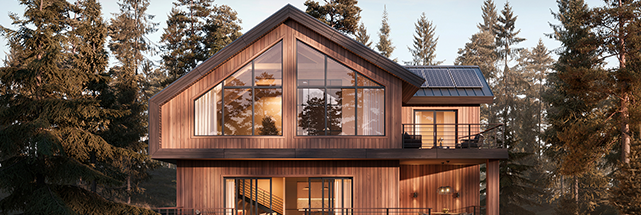
External timber panelling is one of the most versatile and enduring choices for building facades. Whether applied to a new residential build, a commercial structure, or a heritage renovation, timber panelling brings warmth, texture, and a connection to natural materials that manufactured cladding systems rarely replicate. At the same time, it demands careful attention to species selection, profile design, installation method, finishing, and ongoing maintenance to perform reliably over the long term. This guide covers every aspect of external timber panelling — from the properties of different timber species and panel formats to installation best practice, finishing systems, and maintenance requirements.
What Is External Timber Panelling
External timber panelling refers to any system in which timber boards, planks, or engineered timber elements are fixed to the outer face of a building to form the primary weather-facing skin of the wall. The term encompasses a broad range of formats — from traditional horizontal lap siding and vertical board-and-batten to contemporary open-jointed rainscreen panels and large-format engineered timber sheets.
Timber panelling serves multiple functions simultaneously. It acts as the primary barrier against wind-driven rain, contributes to the thermal and acoustic performance of the wall assembly, provides the visual character of the building facade, and — in well-designed installations — allows the wall construction to breathe and manage moisture effectively. Unlike masonry or rendered finishes, timber panelling is a relatively lightweight cladding system that can be applied to a wide range of structural backgrounds, including timber frame, steel frame, masonry, and insulated concrete formwork.
Timber Species for External Panelling
The choice of timber species is the single most important factor in determining the durability, appearance, and maintenance requirements of an external timber panelling system. Species vary considerably in their natural resistance to decay, their dimensional stability under moisture cycling, their density and hardness, and their visual character.
Western Red Cedar
Western red cedar (Thuja plicata) is among the most widely used species for external timber panelling worldwide. Its heartwood contains natural oils and thujaplicins that provide inherent resistance to fungal decay and insect attack, placing it in Durability Class 2 under European timber standards. Cedar is lightweight, dimensionally stable, and easy to machine into a wide variety of profiles. Its warm reddish-brown colour weathers to a consistent silver-grey patina when left unfinished. These properties make it suitable for everything from traditional lap siding to contemporary rainscreen panel systems.
Larch
Siberian larch (Larix sibirica) and European larch (Larix decidua) have gained considerable popularity in external panelling applications across Europe. Larch heartwood is classified as Durability Class 3–4, offering moderate natural durability that is generally considered adequate for exterior cladding in temperate climates when the installation follows good practice principles. Larch has a pronounced grain pattern with alternating pale and reddish-brown growth rings, a density of approximately 590–650 kg/m³, and a reputation for good performance in demanding exposed conditions. It weathers to a silver-grey tone similar to cedar, though more slowly.
Thermally Modified Timber
Thermally modified timber (TMT) is produced by heating timber to temperatures of 160–230°C in a steam or nitrogen atmosphere, which alters the cell structure of the wood, reduces its equilibrium moisture content, and substantially improves its biological durability. Species such as pine, ash, and birch — which in their natural state have limited durability — are transformed into reliably stable exterior cladding materials through the thermal modification process. TMT cladding does not require chemical preservative treatment and has a uniform brown colouration that weathers to grey over time. It is widely used in sustainable construction projects and is particularly valued for its dimensional stability.
Accoya (Acetylated Wood)
Accoya is produced by acetylating radiata pine — a chemical modification process that replaces the hydroxyl groups in the wood cell walls with acetyl groups, dramatically reducing moisture uptake. The result is a timber with Durability Class 1 performance (the highest classification), very low swelling and shrinkage, and a projected service life of 50 years or more in above-ground exterior applications. Accoya accepts paint and stain finishes well and holds its dimensions with exceptional stability. It is used in high-specification facade projects where long-term dimensional performance and finish retention are priorities.
Oak
European oak (Quercus robur) and sessile oak (Quercus petraea) have a long history of use in external construction. Oak heartwood is Durability Class 2, with good natural resistance to decay, and its density (approximately 700 kg/m³) gives it excellent hardness and mechanical resistance. However, oak's high tannin content causes dark staining on contact with steel fixings and can produce tannin run-off that stains surrounding surfaces. Stainless steel or coated fixings are mandatory with oak. Oak weathers to a silver-grey tone and is valued for its prominent grain and the visual depth it brings to building facades.
Siberian Spruce and Pine (Pressure-Treated)
Where budget is a primary constraint, pressure-treated softwoods such as Scots pine and Sitka spruce are used for external panelling. Pressure impregnation with preservative compounds raises the durability of these naturally non-durable species to a level suitable for exterior use. However, treated softwoods require more frequent maintenance and re-finishing than naturally or chemically durable species, and the preservative treatment limits some finish options. They are most commonly used in utility buildings, fencing, and budget residential projects.
External Timber Panelling Profiles and Formats
External timber panelling is available in a wide range of machined profiles, each producing a distinct facade appearance and offering different performance characteristics in terms of weather exclusion, moisture management, and visual effect.
Featheredge (Bevel Siding)
Featheredge boards are tapered in cross-section — thicker at the lower edge and thinner at the top — and installed horizontally with each board overlapping the one below by a defined distance. This classic profile is one of the oldest and most widely recognised forms of external timber panelling. The overlapping installation creates a self-draining weather-shedding surface. Typical board widths range from 100 mm to 250 mm, and the exposed face dimension is set by the degree of overlap at installation. Featheredge profiles are closely associated with traditional domestic architecture across North America, Northern Europe, and Australia.
Shiplap
Shiplap boards have a rebated or recessed profile on each long edge, allowing adjacent boards to overlap with a neat, weathertight joint while maintaining a relatively flat face. The rebated joint resists wind-driven rain penetration more effectively than a simple butt joint and accommodates timber movement without opening a gap between boards. Shiplap is available in both horizontal and vertical orientations and suits contemporary and traditional architectural styles equally well.
Tongue and Groove
Tongue-and-groove (T&G) panelling uses an interlocking male-and-female profile on the long edges of each board, producing a flush-faced exterior finish with a regular shadow line at each joint. T&G profiles can be installed horizontally or vertically and are a common choice for contemporary residential facades where a clean, linear appearance is sought. The interlocking profile provides good lateral stability and helps resist wind-driven rain, though adequate back ventilation remains essential to prevent moisture accumulation behind the panels.
Board and Batten
Board-and-batten panelling consists of wide vertical boards fixed to the wall framing, with narrow cover strips (battens) nailed over the joints between boards. This profile creates a strong vertical emphasis and a tactile surface texture with pronounced shadow lines that change character through the day as the angle of sunlight shifts. Board-and-batten has strong associations with vernacular agricultural architecture and has been adopted widely in contemporary residential design, particularly in rural and semi-rural settings.
Open-Jointed Rainscreen Panels
In open-jointed rainscreen systems, timber boards are mounted on a horizontal or vertical batten framework with deliberate gaps between adjacent boards, in front of a weatherproof breather membrane. The open joints allow air to circulate freely behind the panels, and any rain that penetrates the outer face drains harmlessly down through the cavity. This approach extends the service life of the timber by keeping the back face of each board dry and well-ventilated, significantly reducing the risk of decay. Open-jointed rainscreen panelling is widely used in commercial and high-specification residential projects and is compatible with all durable timber species.
Large-Format Engineered Panels
Engineered timber panel products — including cross-laminated timber (CLT) used as an exposed facade element, plywood with exterior-grade adhesive, and oriented strand board (OSB) with a protective finish — are used in external panelling applications where large format coverage, structural contribution, or a specific textured appearance is required. These products must be manufactured with fully weather-resistant (WBP) adhesives and surface treatments specified for sustained exterior exposure. Large-format panels are typically used in commercial, educational, and multi-residential projects.
Installation Methods and Systems
The long-term performance of external timber panelling depends heavily on the installation system used. A correctly designed installation manages moisture, accommodates timber movement, and maintains structural integrity throughout the building's life.
Ventilated Cavity Systems
The ventilated cavity is the foundation of good external timber panelling installation practice. A minimum 25–50 mm cavity between the back face of the cladding boards and the wall structure — maintained by horizontal or vertical counter-battens — allows air to circulate, moisture to drain, and the wall assembly to dry after rain events. The cavity also provides a thermal break and decouples the external cladding from the structural wall, so that timber movement does not stress the structure. A breather membrane fixed to the structural wall behind the cavity prevents wind-driven rain from reaching the structure if it penetrates the cladding layer.
Direct Fix to Framing
In some residential applications, cladding boards are fixed directly to timber studs or battens without a separate ventilated cavity. While this reduces installation depth, it requires careful attention to back-priming of all board faces and ends, and relies on the profile design to manage water shedding. Direct-fix installations are generally more vulnerable to moisture-related problems than ventilated cavity systems and are not recommended for high-exposure sites or for species with limited natural durability.
Secret Fix Systems
Secret fix systems use concealed clips or brackets to fix cladding boards to the supporting framework without visible fasteners on the face of the boards. This produces a clean, uninterrupted facade surface and eliminates the risk of rust staining around fixing points. Secret fix systems are widely used with hardwood and thermally modified timber cladding in contemporary commercial and residential projects. They must be designed to allow boards to expand and contract freely in response to moisture content changes without binding or splitting.
Fixings and Fasteners
Fixing selection is critical to long-term performance. The acidic extractives present in naturally durable timbers — cedar, oak, larch — corrode standard carbon steel fixings, producing rust staining and progressive fastener weakening. All fixings in contact with external timber panelling should be:
- Stainless steel (A2 or A4 grade) for most applications — A4 (marine grade) is recommended in coastal or highly corrosive environments.
- Hot-dip galvanised steel as an economical alternative for sheltered or semi-exposed applications.
- Silicon bronze in heritage or traditional architectural contexts where the warm colour of the fixing head is a design consideration.
Ring-shank or spiral-shank nails provide significantly better withdrawal resistance than smooth-shank nails and are recommended wherever boards may be subject to movement that could progressively work smooth fixings loose.
Pre-Treatment and Back-Priming
Applying a coat of primer, penetrating oil, or end-grain sealer to all faces and cut ends of cladding boards before installation is one of the most effective measures for extending long-term performance. Back-priming slows differential moisture uptake between the exposed face and the sheltered back face of each board, reducing the tendency for boards to cup toward the face. End-grain sealing is particularly important because end grain absorbs moisture at a rate many times higher than face grain and is the most common point at which decay initiates in inadequately specified or maintained installations.
Finishing Systems for External Timber Panelling
The choice of finish system significantly affects both the visual character of the facade and the maintenance interval required to keep the panelling in good condition. The principal options range from completely unfinished natural weathering to opaque paint systems.
Unfinished Natural Weathering
Many timber species — cedar, larch, oak, and thermally modified timber among them — are routinely left unfinished to weather naturally. UV radiation breaks down surface lignin and successive wetting and drying cycles leach out surface extractives, producing a gradual colour change from the original warm tones to a uniform silver-grey patina over 12–24 months of exterior exposure. Natural weathering is visually valued in many contemporary and vernacular architectural contexts and requires no initial finish application. The underlying timber continues to benefit from its natural or modified durability throughout the weathering process.
Uneven greying, tannin staining, or surface mould can occur on sheltered or north-facing elevations where drying is slow. These issues can be managed by periodic washing or the application of a UV-stabilised clear oil if a more uniform appearance is desired.
Penetrating Oils and Semi-Transparent Stains
Penetrating oil finishes and semi-transparent stains soak into the wood surface and provide UV protection and water repellency while allowing the natural grain and texture of the timber to remain visible. These finishes do not form a surface film, so they cannot peel or flake — they fade gradually as the UV-absorbing components are depleted. Re-application is straightforward and does not require mechanical preparation beyond cleaning. Maintenance intervals are typically two to four years on exposed elevations, depending on the degree of solar and rainfall exposure.
Pigmented semi-transparent stains that contain sufficient light-stable pigment provide better long-term colour retention than clear oils, which offer limited UV protection and allow the timber to continue toning over time.
Opaque Paints and Solid-Colour Stains
Opaque exterior timber paint systems conceal the grain of the wood and allow the facade to be finished in any colour. Solid-colour stains penetrate the wood surface while providing full opacity and are generally preferred over film-forming paints for external timber panelling because they accommodate timber movement more readily without cracking or peeling. A full primer coat applied to all surfaces before installation — including back faces and end grain — is essential for a durable opaque finish. Microporous paint systems allow moisture vapour to pass through the film, reducing the risk of moisture build-up beneath the finish that causes blistering.
Charred Timber (Shou Sugi Ban)
Surface charring — the Japanese technique known as Shou Sugi Ban or Yakisugi — has been widely adopted in contemporary Western architecture as a finish treatment for external timber panelling, particularly on cedar and larch. The charred carbon surface is highly resistant to moisture uptake, UV radiation, and insect and fungal attack. Charred timber panelling has a distinctive deep black or dark graphite appearance that weathers subtly over time to reveal the wood texture beneath the carbon layer. Properly charred and maintained panels are associated with significantly extended service life and reduced maintenance frequency compared to uncharred timber with conventional finishes.
Performance Comparison of Common Timber Panelling Species
The table below summarises the key performance characteristics of the most widely used timber species in external panelling applications.
| Species |
Natural Durability Class |
Density (kg/m³) |
Dimensional Stability |
Natural Weathering |
Typical Applications |
| Western Red Cedar |
Class 2 |
380–390 |
Excellent |
Silver-grey (6–18 months) |
Residential, commercial, rainscreen |
| Siberian Larch |
Class 3–4 |
590–650 |
Good |
Silver-grey (12–24 months) |
Residential, exposed facades |
| European Oak |
Class 2 |
680–720 |
Moderate |
Silver-grey with tannin staining |
Feature panels, commercial, heritage |
| Thermally Modified Timber |
Class 1–2 |
Variable |
Very Good |
Brown to grey (12–18 months) |
Sustainable projects, all building types |
| Accoya |
Class 1 |
Approx. 510 |
Excellent |
Controlled with finish |
High-spec facades, long-life applications |
| Treated Softwood (Pine) |
Class 1 (treated) |
480–550 |
Moderate |
Grey (variable, uneven) |
Utility buildings, budget residential |
Maintenance of External Timber Panelling
All external timber panelling systems require periodic maintenance to preserve their performance and appearance, though the frequency and intensity of maintenance varies considerably by species, finish, and exposure conditions.
Routine Inspection
An annual inspection of all elevations provides the earliest opportunity to identify developing problems before they cause significant damage. Key inspection points include:
- Checking for splitting, cracking, or checking of individual boards, particularly at fixings and board ends where stress concentrations are highest.
- Inspecting fixings for rust staining, which indicates that inadequately corrosion-resistant fasteners were used and should be replaced.
- Looking for surface mould, dark staining, or persistent damp patches that may indicate inadequate ventilation behind the cladding or a blocked drainage path.
- Assessing finish condition — fading, chalking, peeling, or areas of bare timber require attention before moisture enters the wood substrate.
- Checking joints and junctions at windows, doors, eaves, and service penetrations for signs of water ingress or failed sealant.
Cleaning
External timber panelling benefits from periodic cleaning to remove surface deposits of dirt, algae, lichen, and mould. A soft-bristle brush with a mild detergent solution, or a proprietary timber cleaner formulated for the species and finish in question, is the recommended approach. High-pressure washing should be avoided — it can raise the grain, force water behind boards, damage the surface finish, and dislodge fixings in some profile types. Low-pressure rinsing with clean water is appropriate as a final step after cleaning.
Re-Finishing
Penetrating oil and stain finishes should be re-applied when the existing finish has depleted to the point where water is absorbed rather than beading on the surface, or at the interval recommended by the finish manufacturer — typically every two to four years on south- and west-facing elevations in temperate climates. Preparation before re-finishing includes cleaning, light sanding of any raised grain or loose surface fibres, and spot treatment of any areas showing early signs of mould or surface breakdown. Opaque paint systems require more thorough surface preparation — any failing or peeling paint must be removed before new coats are applied.
Individual Board Replacement
One practical advantage of timber panelling over monolithic rendered or sheet metal cladding systems is that individual boards can be replaced without disturbing the surrounding installation. When a board has split, decayed, or been mechanically damaged, it can be carefully removed and replaced with a matching board. Colour matching between new and weathered timber can be challenging; retaining a small stock of boards from the original installation, or applying a weathering accelerator to new boards, helps minimise the visual difference.
Sustainability and Environmental Considerations
External timber panelling compares favourably with most competing facade materials on environmental grounds, provided that sourcing, specification, and end-of-life considerations are managed thoughtfully.
Carbon Sequestration and Embodied Carbon
Timber is the only widely used construction material that sequesters atmospheric carbon during its growth. A cubic metre of timber stores approximately 0.9 tonnes of CO₂ equivalent for the duration of its service life, and the energy required to process timber into cladding products is substantially lower than that required to manufacture aluminium, steel, fibre cement, or PVCu cladding of comparable performance. In the context of whole-life building carbon assessment, external timber panelling typically offers a significantly lower embodied carbon footprint than competing manufactured cladding systems.
Responsible Sourcing
The environmental credentials of external timber panelling depend on the sourcing practices of the supply chain. Timber specified from forests certified to credible standards — FSC (Forest Stewardship Council) or PEFC (Programme for the Endorsement of Forest Certification) — provides assurance that the forest of origin is managed to defined sustainability criteria covering biodiversity conservation, community rights, and long-term forest productivity. Chain-of-custody certification from the processing and distribution chain confirms that certified timber has not been mixed with non-certified material in transit from forest to building site.
Durability and Service Life
A long service life is itself a sustainability advantage — a cladding system that lasts 50 years consumes far less resource over the building's life than one that must be replaced after 15–20 years. Specifying naturally durable or durability-enhanced timber species, combined with correct installation and maintenance practice, is the most effective way to maximise the environmental return on the embodied carbon invested in an external timber panelling system.
End-of-Life Recovery
At the end of its service life, external timber panelling can be composted, used as biomass fuel, or — in the case of high-quality hardwood or durable softwood boards in good condition — reclaimed for secondary use in lower-grade applications. Timber panelling does not produce persistent microplastic pollution or toxic leachates during its service life or at end of life, unlike PVCu and some composite panel products.
Common Problems and How to Avoid Them
Most problems encountered with external timber panelling in service are preventable through correct specification, installation, and maintenance. The following are the most frequently encountered causes of underperformance:
- Specifying non-durable timber without treatment: Using sapwood-rich boards or naturally non-durable species without appropriate preservative treatment or durability enhancement in a high-exposure installation leads to rapid decay. Always match species durability to the hazard class of the installation.
- Installing boards at incorrect moisture content: Boards installed too wet will shrink after fixing, opening joints and straining fasteners. Boards installed too dry in a wet climate will expand and cup. Allow boards to acclimatise on site before installation and verify moisture content with a calibrated moisture meter.
- Omitting back-priming and end-grain sealing: These steps cost little in time and materials but have a disproportionate impact on long-term performance. Skipping them is one of the most common causes of premature board cupping, splitting, and decay at board ends.
- Using corrosive fixings: Carbon steel nails and screws corrode rapidly in contact with the acidic extractives of cedar, oak, and larch, causing rust staining and fastener failure within a few years. Use only stainless steel, hot-dip galvanised, or silicon bronze fixings throughout.
- Omitting or blocking the ventilated cavity: A ventilated cavity behind the panelling is essential for moisture management and drying. Blocking the cavity — whether by poor detailing at the base or by insulation incorrectly installed in the batten space — creates conditions for decay even in naturally durable species.
- Insufficient clearance from ground level: Cladding boards should maintain a minimum clearance of 150–200 mm above finished ground level and above all horizontal surfaces. Ground contact or sustained wetting at the base of the panelling overwhelms even the most durable timber's natural resistance to decay.
- Neglecting finish maintenance: Allowing a penetrating oil or stain finish to fail without re-application exposes the timber surface to direct UV and moisture cycling. Once the finish has broken down, moisture can enter joints and board ends, accelerating the decay process. Maintain finishes on the schedule recommended by the product manufacturer.

 English
 한국어
한국어 Español