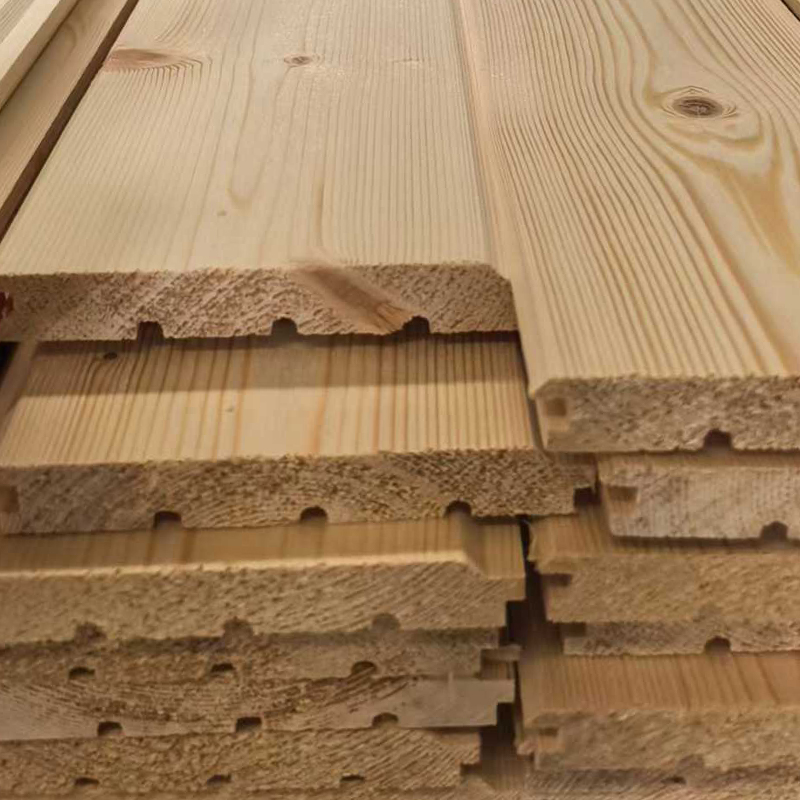
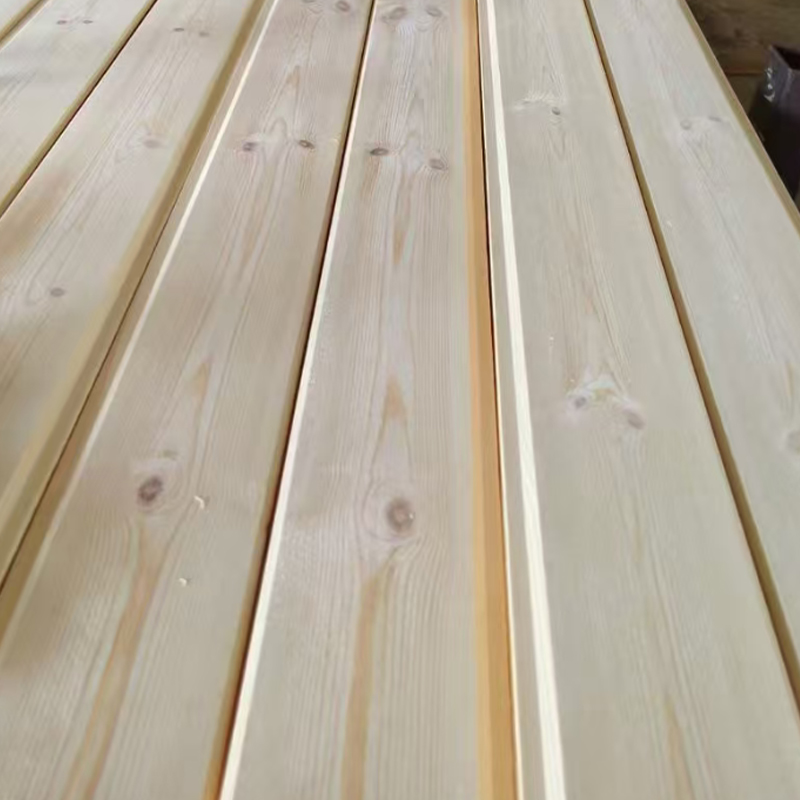
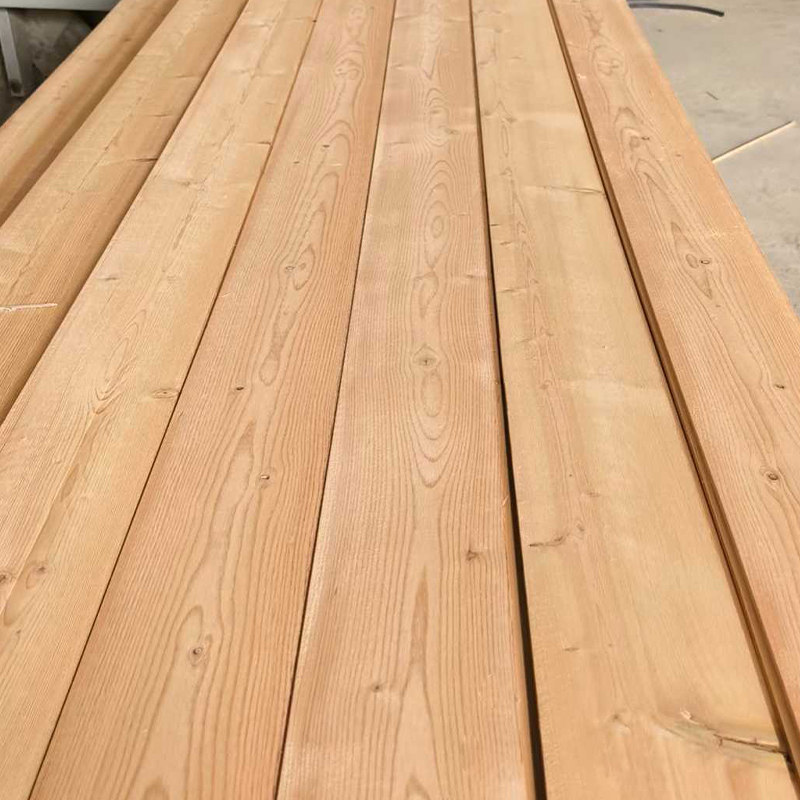
Exterior glue laminated beams — commonly known as exterior glulam beams — are engineered wood products made by bonding multiple layers of dimension lumber together with moisture-resistant, weatherproof adhesives. Unlike standard sawn timber, which is cut from a single log, glulam beams are assembled under controlled factory conditions, with the grain of each lamination running parallel to the beam's length. The result is a structural member that delivers exceptional load-bearing performance across long spans while resisting the dimensional changes that cause ordinary timber to warp, split, or sag over time.
The critical distinguishing feature of exterior glue laminated beams — as opposed to their interior-grade counterparts — lies in the adhesive system used during manufacture. Exterior glulam beams rely on fully waterproof adhesives, most commonly resorcinol-formaldehyde or melamine-urea-formaldehyde systems, that are rated to withstand prolonged moisture exposure, freeze-thaw cycling, and the thermal stresses that outdoor environments impose. These adhesive bonds do not creep, delaminate, or soften under the conditions that would compromise interior-grade products.
Exterior glulam beams are classified under the ANSI/AITC A190.1 standard in North America and BS EN 14080 in Europe, which govern manufacturing tolerances, adhesive performance, and moisture content requirements for structural applications.
How They Are Manufactured
The production of exterior glue laminated beams begins with the careful selection and kiln-drying of individual laminations, typically between 19 mm and 45 mm thick. Lumber species commonly chosen for their strength-to-weight ratio and natural durability include Douglas fir, southern yellow pine, western larch, and European spruce. Each board is mechanically graded for stiffness and visual defects before being surfaced to a precise thickness to ensure tight, uniform glue lines.
The laminations are arranged strategically: higher-grade timber is placed at the top and bottom — the zones subject to the greatest bending stress — while mid-grade material occupies the neutral axis at the beam's core. This deliberate layering, known as stress-class lamination, means that no single knot or grain irregularity can propagate through the entire cross-section. The boards are finger-jointed end-to-end to create continuous laminations of any required length, then spread with the waterproof adhesive and stacked in a hydraulic or pneumatic press under carefully calibrated pressure until full cure is achieved.
The finished beam is then planed on all four faces to achieve a smooth, dimensionally precise profile before being stamped with a third-party certification mark that confirms compliance with the applicable manufacturing standard.
Where Exterior Glulam Beams Are Used
Exterior glue laminated beams are the structural element of choice wherever wood must perform reliably in an exposed or semi-exposed environment over decades. Their applications span a remarkably broad range of project types:
Bridges & Walkways
Pedestrian bridges, boardwalks, and rural road bridges where glulam's strength-to-weight advantage reduces foundation loads and accelerates construction.
Pergolas & Canopies
Freestanding outdoor structures, shade canopies, and roofed terraces that require long clear spans without intermediate columns.
Marine Structures
Dock framing, boat-house roofs, and coastal pavilions where saltwater air and humidity demand fully waterproof adhesive bonds.
Exposed Roof Frames
Vaulted roofs, cathedral frames, and open-air pavilion structures where beams are visible and aesthetics matter alongside performance.
Retaining Structures
Landscape walls, slope stabilisation, and waterfront retaining systems in aggressive soil or tidal environments.
Agricultural Buildings
Barns, riding arenas, and storage buildings exposed to high humidity, animal waste gases, and wide temperature swings.
Technical Advantages Over Sawn Timber and Steel
Exterior glue laminated beams offer a set of performance characteristics that no single competing material can fully replicate. Understanding these advantages is essential for specifying the right structural solution:
Span capability. Because individual laminations can be finger-jointed to virtually any length and then pressed together, exterior glulam beams are routinely manufactured in lengths exceeding 30 metres. Clear spans of this magnitude are structurally impractical with sawn timber and add considerable cost when achieved with steel.
Dimensional stability. The laminating process redistributes and effectively neutralises the natural growth stresses locked inside each board. The statistical averaging of defects across many laminations means that exterior glulam beams exhibit far less creep, twist, and shrinkage than sawn timber of equivalent cross-section.
Camber. Glulam beams can be manufactured with a built-in upward curve, or camber, that counteracts the long-term deflection caused by dead loads. A properly cambered beam will straighten over time as the structure settles, maintaining the visual and structural geometry the designer intended.
Fire performance. Heavy timber sections, including large exterior glulam beams, are well-recognised for their predictable charring behaviour in fire. The outer char layer that forms rapidly during combustion acts as an insulating shell that slows heat penetration into the structural core. Design codes in most jurisdictions allow glulam beams to achieve 60 or 90 minutes of fire resistance through section sizing alone, without additional intumescent protection.
Carbon sequestration. Each cubic metre of structural timber locks up approximately one tonne of CO₂ absorbed by the tree during growth. Specifying exterior glulam beams in place of steel or concrete framing members represents a meaningful contribution to the embodied carbon budget of a project.
Species and Grade Selection
The structural performance of an exterior glue laminated beam is a direct function of the species and grade of timber used in its laminations. For heavily loaded or long-span applications, Douglas fir-larch (DF-L) glulam is the most widely specified combination in North American practice, delivering bending design values in the range of 16 to 24 MPa depending on the combination symbol. Southern yellow pine offers comparable stiffness with slightly greater natural durability, making it a preferred choice for ground-contact or near-water applications where preservative treatment depth may be limited.
In European construction, whitewood and redwood spruce dominate the glulam supply chain, with strength classes from GL24h to GL32h covering the majority of commercial structural applications. Hardwood glulam produced from European oak or ash is gaining traction in architecturally prominent outdoor projects where the beam's surface texture and colour are considered design elements in their own right.
Species selection for exterior applications must also account for treatability — the ease with which preservative chemicals can be pressure-impregnated into the timber cells. Some high-density species such as Douglas fir heartwood are difficult to treat to full penetration, which may influence the choice between naturally durable and chemically protected options for any given exposure class.
Preservative Treatment and Hazard Classes
Even the most durable species benefits from preservative treatment in severe exterior exposures. Exterior glue laminated beams are classified according to the hazard or use class system — known as UC (use category) in North America and the analogous hazard class (HC) system in Europe — which defines the biological agents and moisture conditions that the treatment must resist.
Beams used above ground in covered but ventilated structures typically fall into Use Class 3.1 or 3.2, requiring protection against surface mould, blue stain fungi, and wood-decay fungi under intermittent wetting. Beams in contact with the ground or continuously exposed to fresh or salt water are assigned to Use Class 4 or 5, demanding treatment systems — such as copper azole, alkaline copper quaternary (ACQ), or creosote for industrial applications — that can resist the most aggressive decay and termite pressures.
A critical manufacturing consideration is the sequence of treatment and gluing. In most exterior glulam specifications, the individual laminations are treated and re-dried to an appropriate moisture content before gluing, ensuring that the adhesive bonds to the wood surface rather than to a residue of wet preservative chemical. This pre-treatment approach is far superior to dipping or spraying the finished beam, which cannot deliver adequate penetration into the beam's interior.
Detailing for Durability
The long-term performance of exterior glue laminated beams is determined as much by the quality of structural detailing as by material specification. Even the most rigorously manufactured beam will deteriorate prematurely if water is allowed to pond on horizontal surfaces, enter end-grain, or become trapped behind connections.
End-grain sealing is among the most consequential details in exterior glulam construction. Because wood absorbs moisture seven to fourteen times faster through end-grain than through side-grain, all cut ends should be sealed immediately with a penetrating epoxy or proprietary end-grain sealer to reduce the moisture cycling that leads to checking and splitting at finger joints.
Connections deserve equally careful attention. Metal connectors, bolts, and hangers should be fabricated from hot-dip galvanised or stainless steel to match the design life of the beam. Where preservative-treated timber is specified, the higher copper content of modern treatment systems can cause accelerated corrosion of zinc-coated fixings — specifying Type 316 stainless steel for connection hardware is strongly advisable in UC4 and above applications.
Wherever possible, beams should be oriented and detailed to drain freely. A slight pitch on the top face of a horizontal beam, or the provision of drip grooves cut into the bottom arris, can dramatically extend service life by preventing standing water from softening the surface and initiating fungal colonisation.
Maintenance and Inspection
Exterior glue laminated beams are not maintenance-free, though their maintenance requirements are modest compared with steel structures of equivalent scale. A routine inspection programme — ideally conducted annually in the first three years after completion and every two to three years thereafter — should assess the condition of the surface coating or finish, the integrity of connection hardware, any cracking or checking in the beam faces, and evidence of biological attack such as discolouration, soft spots, or fruiting bodies of wood-decay fungi.
Surface checks — the narrow radial cracks that develop as timber responds to seasonal moisture cycling — are a cosmetic rather than structural concern in most cases. Structural checks that run across the full depth of a lamination, or that expose end-grain to wetting, warrant closer investigation and possible resealing. Any connection hardware showing rust staining or section loss should be replaced before corrosion progresses to the point of reducing fastener capacity.
Penetrating stains and preservative oils, reapplied on the manufacturer's recommended schedule, replenish the biocide content that depletes over time from weathering and UV exposure, and maintain the moisture-repelling surface that protects the wood beneath. This relatively simple maintenance commitment, carried out consistently, is the single most effective way to extend the service life of an exterior glulam installation well beyond its nominal design life of 50 to 100 years.
Key specification checklist
Confirm exterior-grade adhesive system (not interior)
Select species and combination symbol for design loads
Assign correct hazard/use class for exposure conditions
Specify pre-treatment of laminations before gluing
Detail end-grain sealing at all cut faces
Use stainless or hot-dip galvanised connection hardware
Require third-party certification mark on all beams
Establish a maintenance and inspection programme
Cost Considerations and Procurement
Exterior glue laminated beams carry a price premium over standard sawn timber, reflecting the additional manufacturing steps, the cost of high-performance adhesive systems, and the quality-control burden of third-party certification. In North American markets, expect to pay between 20 and 50 per cent more for certified exterior glulam compared with an equivalent volume of number two Douglas fir, depending on section size, length, and whether preservative treatment is included in the supply scope.
This premium is almost always offset at the project level, however, by reductions in foundation size (lighter than equivalent steel), faster erection times (large engineered sections reduce piece count), and extended maintenance intervals that reduce whole-life costs. For projects targeting LEED certification or other green building standards, the carbon sequestration and embodied energy advantages of exterior glulam over structural steel can also contribute meaningfully to point scoring.
Lead times for non-standard sections — curved arches, tapered beams, or large custom cross-sections — typically run from three to eight weeks from an order date, and specifiers are well advised to confirm fabricator capacity early in the design programme. Standard straight rectangular sections in common sizes are carried in stock by most structural timber distributors and can often be delivered within one to two weeks.
The Future of Exterior Glue Laminated Construction
Advances in adhesive chemistry, digital fabrication, and timber engineering continue to expand what is possible with exterior glue laminated beams. Structural health monitoring systems — embedded fibre-optic strain sensors that transmit real-time data on load, moisture, and temperature through the beam cross-section — are beginning to appear in long-span bridge and pavilion projects, enabling predictive maintenance that further reduces the risk of unplanned structural interventions.
Meanwhile, the push toward mass timber construction in urban environments is generating growing interest in hybrid systems that pair exterior glulam frames with cross-laminated timber (CLT) panels for decking, walls, and cantilevered floors. These hybrid assemblies bring the span efficiency of glulam together with the diaphragm stiffness of CLT to produce structural envelopes of genuine architectural ambition.
As global timber supply chains increasingly prioritise certified sustainable sources — with FSC and PEFC certification now standard expectations for public-sector procurement in most European markets — exterior glue laminated beams are well positioned to serve as the primary structural material of choice for exposed, long-span, and environmentally sensitive projects for decades to come.

 English
 한국어
한국어 Español