Larch battens have earned a distinguished reputation in both traditional and contemporary construction. Valued for their exceptional durability, warm tonal richness, and natural resistance to decay, they remain one of the most versatile timber components available to architects, builders, and landscape designers alike.
Larch battens are narrow strips of sawn or planed timber cut from European larch (Larix decidua) or Siberian larch (Larix sibirica). Unlike most conifers, larch is a deciduous softwood — it sheds its needles in winter — and this unusual biology contributes directly to the wood's density and resinous character. The slow growth of larch in mountainous regions produces tightly packed growth rings, resulting in timber that outperforms many softwoods in hardness and resilience.
A batten, in construction terms, is a length of timber used to support, space, or finish a surface. Larch battens fulfil this role across an enormous range of applications: as counterbattens beneath roof tiles, as the primary substrate for timber cladding systems, as screening elements in garden design, and as decorative feature strips in interior joinery. Their dimensional versatility — available from narrow 25×38 mm profiles up to deep 50×100 mm sections — makes them adaptable to almost any structural or aesthetic requirement.
"Larch has the rare quality of improving in character with age — its surface silvers to a distinguished grey, while the timber beneath remains structurally sound for decades."
Why Choose Larch? Key Properties Explained
Natural Durability and Resin Content
The defining advantage of larch over comparable softwoods such as pine or spruce is its high resin content, which acts as a natural preservative. This resin impregnates the heartwood — the dense inner core of the timber — creating a barrier against fungal decay, moisture ingress, and insect attack. In practical terms, this means larch battens used in external applications can often be installed without chemical treatment, reducing environmental impact and maintenance obligations over the building's life.
European larch is classified as Durability Class 3–4 under EN 350, meaning it is moderately to slightly durable when used in conditions involving periodic wetting and drying — precisely the conditions encountered in external cladding, roofing underlays, and garden structures. For fully exposed installations or ground contact, a natural oil finish is recommended to preserve the surface whilst allowing the timber to breathe.
Dimensional Stability
Larch exhibits lower shrinkage rates than many comparable timbers, an important characteristic in cladding and screening applications where movement at joints can lead to gaps, splitting, or fixings working loose. When kiln-dried to a moisture content of 16–20% for external use — or 12–15% for sheltered or semi-exposed positions — larch battens behave predictably over time, reducing the risk of warping, cupping, or twisting that can compromise both the aesthetic and structural integrity of a finished surface.
Aesthetic Character
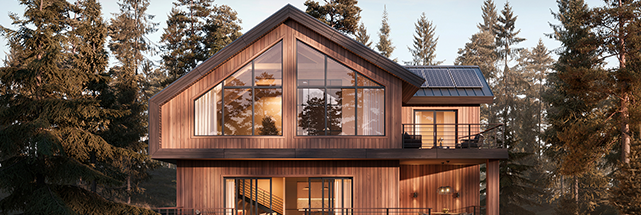
Few timber species offer the visual range of larch. Fresh-sawn larch displays a warm amber-orange hue that deepens to rich honey-brown in its first season. Left unfinished outdoors, larch silvers gracefully to a driftwood grey — a quality actively sought by architects working in the Scandinavian or Japanese-influenced traditions. Applied with a penetrating oil, the original warmth can be preserved indefinitely. This dual character makes larch battens equally at home on a contemporary urban façade and a rural agricultural building.
Primary Applications of Larch Battens
Timber Cladding Systems
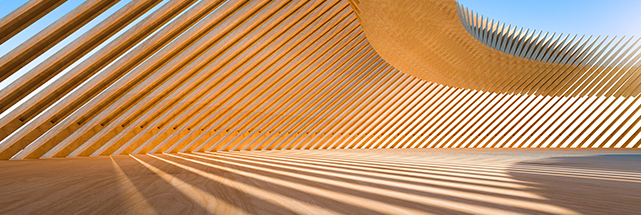
The most widespread application for larch battens is as cladding on external walls, either as the primary visible surface or as part of a rain-screen system. In a vertical or horizontal batten-and-board arrangement, battens create the rhythm and shadow line of the façade. Several established profiles are commonly specified:
- Open-jointed cladding: Battens are fixed with deliberate gaps between boards, allowing air movement behind the surface and creating strong shadow lines that articulate the elevation.
- Feather-edge boarding: Tapered boards fixed in overlapping horizontal courses, providing a weather-tight skin with a traditional character.
- Shiplap and rebated profiles: Interlocking boards that resist wind-driven rain whilst maintaining a clean, flat face — popular in contemporary residential work.
- Shadow gap cladding: Boards fixed to a sub-batten with a defined gap revealing the darker batten behind, creating a precise, architectural joint detail.
- Vertical board-on-board: Wide boards overlapped with narrower cover battens, combining practicality with a robust, tactile surface quality.
Roofing Battens and Counter-battens
Larch is a favoured timber for roofing battens in regions where traditional or premium specifications are required. Roofing battens are the horizontal members to which roof tiles or slates are nailed; counter-battens run vertically over the roofing underlay to create a ventilated drainage channel beneath the tile battens. The durability and stiffness of larch make it well suited to both roles, particularly on long roof pitches where tile loads are significant. For roofing applications, battens are typically graded to BS 5534 to ensure consistent strength and freedom from defects that could compromise fixing performance.
Garden Structures and Landscape Design
Beyond the building envelope, larch battens are extensively used in landscape and garden design. Their durability in periodic wet-dry cycles makes them suitable for pergolas, screen fences, raised planter beds, decking balustrades, and bespoke garden furniture. A simple fence constructed from evenly spaced larch battens fixed to a sawn frame is one of the most cost-effective ways to achieve a refined, contemporary boundary treatment — one that will mellow attractively over years without demanding significant maintenance.
Interior Applications
The use of larch battens is not limited to the exterior. In interior joinery, larch offers warmth and character that engineered boards cannot replicate. Feature walls in living areas, acoustic panelling in commercial interiors, open shelving systems, and bespoke stair balustrades all benefit from the natural variation in grain and colour that larch provides. When used internally, battens are typically planed smooth or sanded and finished with a clear hard-wax oil to bring out the grain whilst protecting the surface from everyday wear.
Siberian Larch vs. European Larch Battens
Two species dominate the market for larch battens in the UK and Europe: European larch (Larix decidua), sourced primarily from the Alps, Scotland, and Poland, and Siberian larch (Larix sibirica), imported from Russia and increasingly from Scandinavia. Both are excellent performers, but there are meaningful differences worth understanding.
| Property |
European Larch |
Siberian Larch |
| Durability Class |
Class 3–4 |
Class 3 |
| Density |
~550 kg/m³ |
~560–600 kg/m³ |
| Resin Content |
High |
Very high |
| Grain Consistency |
Variable, characterful |
Tight, very consistent |
| Movement |
Moderate |
Lower (denser) |
| Knot Frequency |
More frequent |
Fewer, smaller |
| Typical Use Case |
Cladding, fencing, landscaping |
Premium cladding, screening |
| Availability (UK) |
Good |
Good (note: supply disruptions possible) |
Siberian larch has grown in popularity due to its superior density and very tight grain, which translates to outstanding surface stability in cladding applications. However, geopolitical factors have at times affected supply chains for Russian-sourced timber, prompting many specifiers to consider European larch or certified alternatives from Latvia and Finland.
Installation Guide: Larch Battens for External Cladding
1. Acclimatisation and Moisture Content
Before installation, larch battens should be allowed to acclimatise on site for a minimum of one to two weeks, stacked with stickers (spacers) to allow airflow on all faces. This equilibrates the timber's moisture content to site conditions and reduces the risk of post-installation movement. Target moisture content for external cladding is typically 16–20%; for sheltered or semi-exposed positions, 12–16%.
2. Subframe and Counter-batten System
A correctly designed subframe is as important as the cladding boards themselves. Fix vertical treated softwood or larch counter-battens (typically 38×50 mm or 50×50 mm) directly to the structural substrate at 400–600 mm centres, ensuring they are plumb and in a true plane. This creates a ventilated cavity of at least 25 mm behind the cladding, which allows air movement, prevents moisture accumulation at the back face of the boards, and significantly extends the service life of the installation.
3. Fixings
Always use stainless steel or hot-dip galvanised fixings with larch. The resin and tannins in larch react with standard zinc-plated screws, causing unsightly blue-black staining that bleeds across the face of the timber and is extremely difficult to remove. Ring-shank or spiral-shank nails provide superior pull-out resistance compared to smooth-shank alternatives, and are preferred in wind-exposed locations. For secret-fixed systems, stainless steel clips designed for timber cladding provide a clean, fixing-free face and accommodate thermal movement more effectively.
4. Joint and End-grain Treatment
End grain is the primary point of moisture entry in any timber cladding system. Before installing larch battens, apply two coats of a penetrating end-grain sealer or the specified finish to all cut ends, particularly at the foot of vertical boards where water can accumulate. Allow full drying before enclosing joints. Install at a minimum of 150 mm above finished floor or ground level to avoid splash-back wetting.
Sustainability note: Specify FSC- or PEFC-certified larch battens wherever possible. Both European and Siberian larch are available with full chain-of-custody certification, ensuring the timber originates from responsibly managed forests. For projects requiring BREEAM, LEED, or other environmental ratings, certified larch contributes positively to materials credits.
5. Finishing Options
The finishing strategy for larch battens should be established at design stage, as it influences both the maintenance programme and the long-term appearance of the installation. Three principal approaches are used:
- Unfinished / natural weathering: Larch will silver to a uniform grey over 12–24 months. No ongoing maintenance is required, though the surface may develop a textured patina. Ideal for contemporary or vernacular projects where a natural, low-maintenance aesthetic is desired.
- Penetrating oil finish: A single or two-coat application of a quality exterior timber oil preserves the warm original tone and provides water repellency without forming a surface film that can crack or peel. Typically requires reapplication every 2–4 years depending on exposure.
- Modified or pigmented stain: Water-repellent stains in grey, brown, or black tones allow the texture of the grain to show whilst providing a consistent colour from the outset, avoiding the variable patination of natural weathering. Suitable for projects where colour consistency across the façade is critical.
Maintenance and Long-term Care
One of the most compelling arguments for specifying larch battens is their low maintenance requirement relative to other external timber species. When correctly installed with adequate ventilation and appropriate fixings, larch cladding demands very little intervention in its first decade of service.
An annual inspection is advisable, focusing on the base of vertical cladding boards (where ground splash can accelerate decay), around window and door reveals (where water can pond on horizontal sills), and at any penetrations through the cladding for pipes or cables (where the seal between timber and penetrating element may deteriorate). Surface cleaning with a soft brush and mild detergent solution removes algae, lichen, and airborne grime that can trap moisture against the surface. Avoid high-pressure washing, which can drive water into joints and open the grain of the timber, accelerating moisture uptake.
Any boards or battens showing signs of decay — typically identified by surface softness, discolouration, or cracking beyond normal checking — should be replaced individually without disturbing the surrounding installation. The modular, board-by-board construction of most larch cladding systems makes targeted repairs straightforward and cost-effective.
Sourcing and Specifying Larch Battens
When purchasing larch battens, several specification points should be confirmed with the supplier to ensure the material meets project requirements. Moisture content at point of delivery is perhaps the most critical: timber supplied above 20% moisture content for external use, or above 15% for internal use, is likely to move excessively after installation. Reputable suppliers will provide kiln-drying certificates or moisture content test results on request.
Grading is equally important. Specify the grading standard applicable to the intended use — C16 or C24 structural grading for roofing battens, BS 5534 compliance for tile battens, or a visual appearance grade (such as "Select" or "Rustic") for cladding work. Clear communication of grading requirements avoids disappointment when material arrives on site with more knottiness or surface variation than anticipated.
For large or complex projects, consider requesting a pre-order sample board to evaluate colour, grain character, and surface quality before committing to full quantities. Larch is a natural material and variation between batches — particularly in colour and resin distribution — is entirely normal. A sample review allows finish choices to be calibrated to the actual material that will be installed.
"Specifying larch is as much a philosophy as a technical decision — it is a commitment to materials that age with dignity, carry the marks of their environment, and grow more characterful with every passing season."
Larch battens represent one of the most well-rounded choices available in the timber specification palette. Their natural durability reduces the environmental burden of chemical treatment; their dimensional stability supports precise, long-lasting installations; and their capacity to weather gracefully or retain their warmth under oil offers designers genuine aesthetic flexibility. Whether specified for a high-exposure coastal cladding project, a sheltered garden screen, or an interior feature wall, larch consistently rewards careful detailing and correct installation with decades of reliable, beautiful performance.
As pressure mounts to reduce embodied carbon and chemical inputs in construction, responsibly sourced larch battens offer a compelling answer: a material that is genuinely durable by nature, visually distinctive, and deeply embedded in the craft traditions of European building. Few timber choices carry so much functional substance and aesthetic character in a single species.

 English
 한국어
한국어 Español