What Is Glulam Glued Laminated Timber?
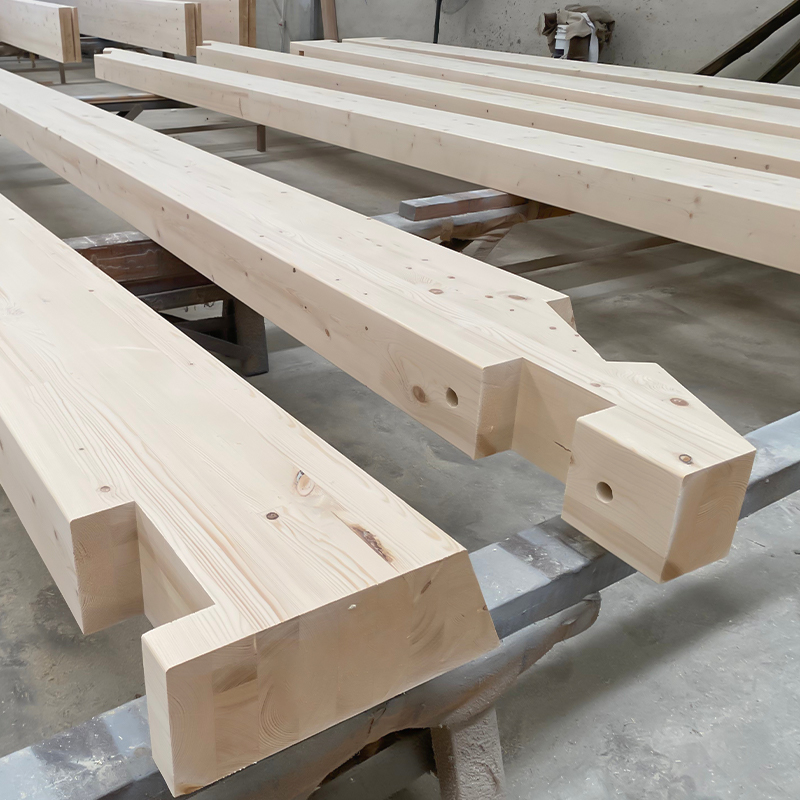
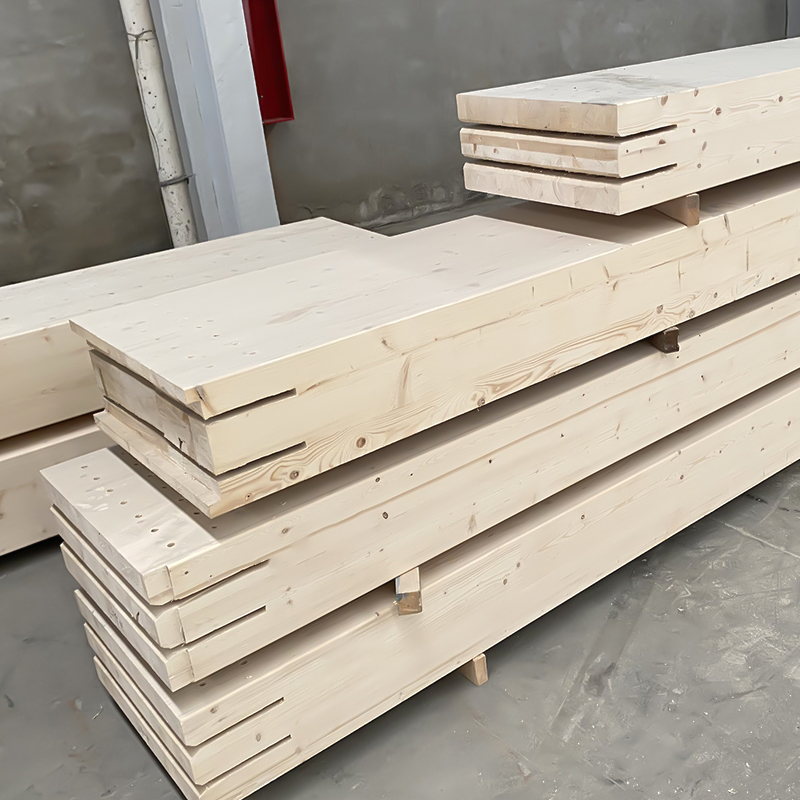
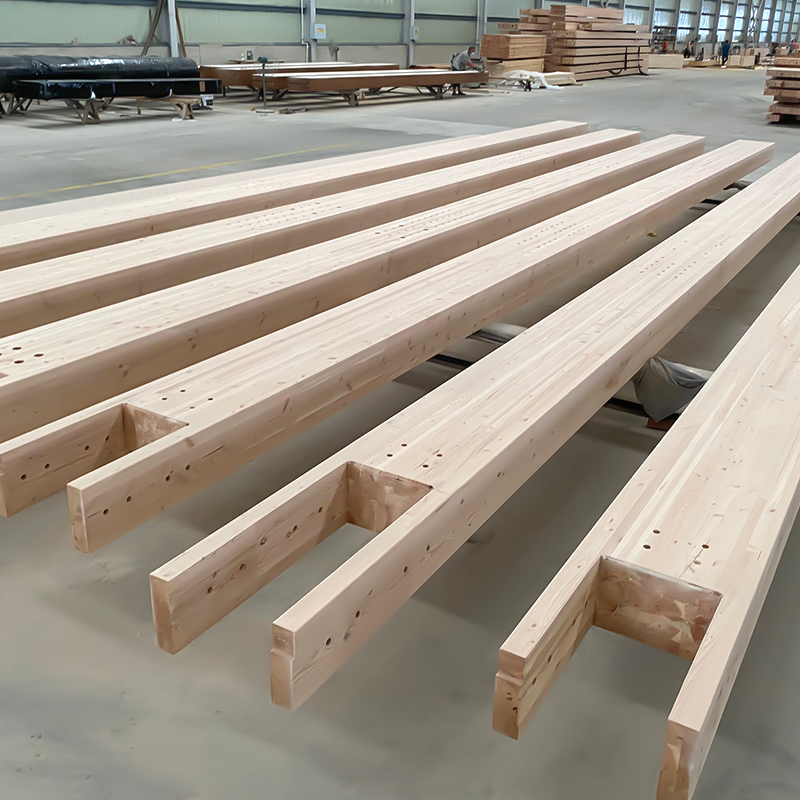
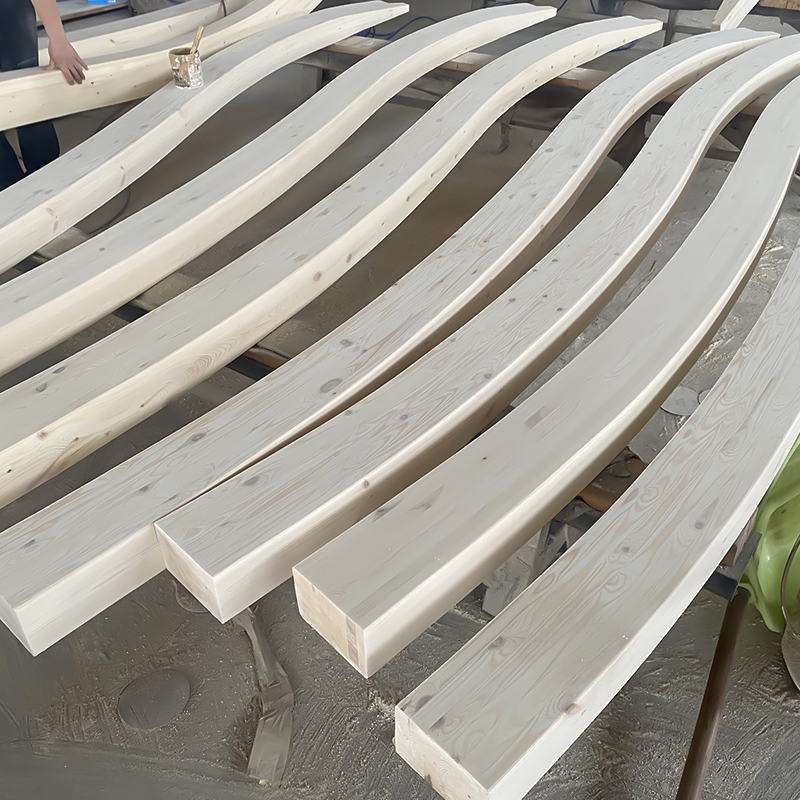
Glulam — short for glued laminated timber — is an engineered wood product made by bonding multiple layers of dimension lumber together with durable, moisture-resistant adhesives. The grain of each lamination runs parallel to the length of the member, creating a structural element that is stronger, more stable, and more versatile than solid sawn timber of the same size.
Glulam was first developed in Europe in the early 1900s and has since become a globally recognized structural material. Today it is manufactured to meet strict standards such as ANSI/AITC A190.1 in North America and EN 14080 in Europe, ensuring consistent quality across projects of all scales.
How Glulam Is Manufactured
The manufacturing process is highly controlled and follows a consistent sequence:
- Lumber is kiln-dried to a moisture content of 12% or less to minimize shrinkage and warping after installation.
- Each board is visually or mechanically graded to determine its stiffness and strength properties.
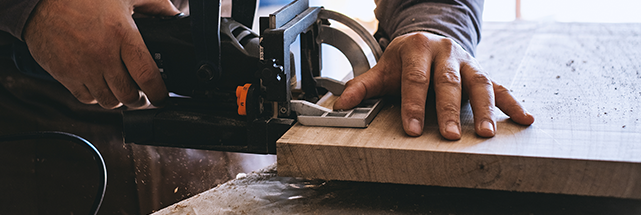
- Boards are finger-jointed end-to-end to create long laminations without natural length limits.
- Structural adhesive — typically melamine-urea-formaldehyde (MUF) or polyurethane — is applied between layers.
- The assembly is clamped under pressure until the adhesive cures fully.
- The finished beam is planed, cut to final dimensions, and treated or sealed as needed.
This process allows manufacturers to place higher-grade laminations in the zones of greatest stress — typically the top and bottom of a beam — while using lower-grade material in the core, optimizing both performance and cost.
Structural Performance: How It Compares to Other Materials
Glulam punches well above its weight class compared to both solid timber and steel when evaluated on a strength-to-weight basis.
| Material |
Density (kg/m³) |
Bending Strength (MPa) |
Strength-to-Weight |
| Glulam (GL24h) |
420–500 |
24 |
High |
| Solid Sawn Timber |
450–600 |
14–18 |
Moderate |
| Structural Steel |
7,850 |
250+ |
High (but much heavier) |
| Reinforced Concrete |
2,400 |
3–5 (tension limited) |
Low |
Approximate structural comparison of common building materials
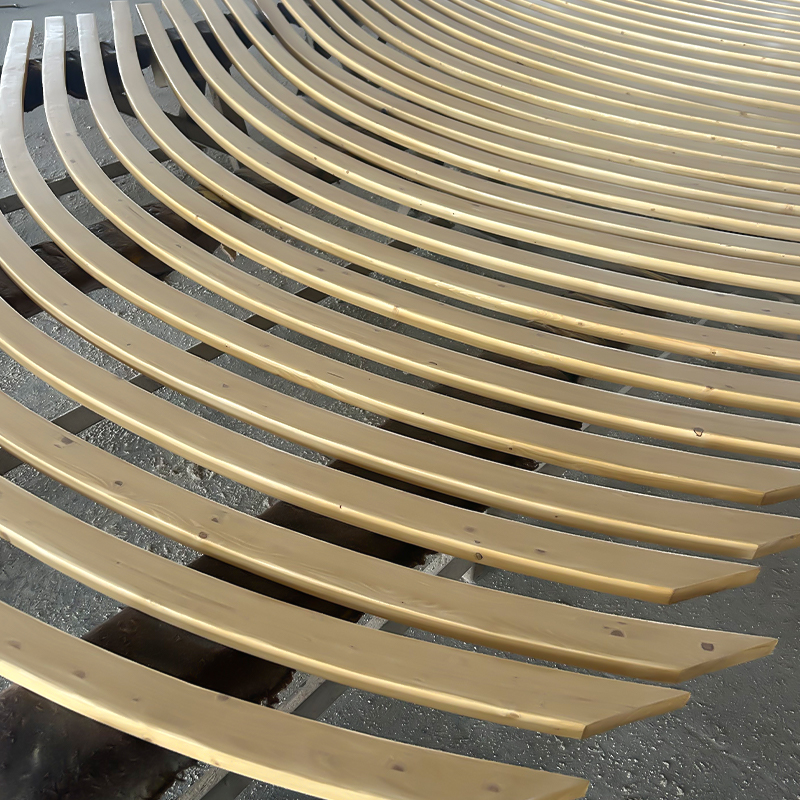
Because glulam is roughly 5 times lighter than steel per unit volume, it significantly reduces foundation loads and simplifies logistics on site. Spans of 30 meters or more are achievable with glulam arches and curved beams — a feat impossible with solid timber.
Key Advantages of Glulam in Construction
Dimensional Flexibility
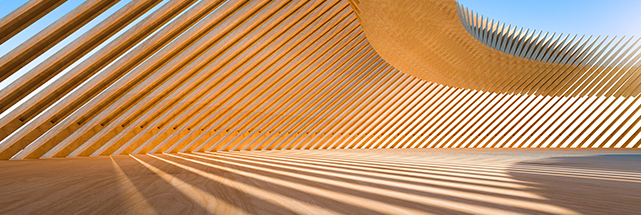
Glulam can be manufactured in virtually any length, width, or depth. It can also be curved or tapered during production, enabling dramatic architectural forms — domes, arches, and sweeping rooflines — that would require complex steel fabrication or be structurally impossible in solid wood.
Predictable and Consistent Performance
Natural timber has inherent variability from knots, grain deviation, and density differences. Glulam's laminated construction averages out these defects, producing members with more predictable structural properties and lower design safety margins than solid timber of the same species.
Fire Resistance
Large glulam sections char at a predictable rate of approximately 0.7 mm per minute in fire. The char layer insulates the inner wood and maintains load-bearing capacity longer than unprotected steel, which can lose strength rapidly above 550°C. This allows glulam to be used in exposed structural applications while still meeting fire safety codes.
Sustainability
Glulam manufactured from sustainably certified forests (FSC or PEFC) is a genuinely low-carbon material. Wood sequesters atmospheric CO₂ throughout its life, and the production of glulam generates far fewer greenhouse gas emissions than steel or concrete. Studies estimate that replacing concrete and steel with timber products in a mid-rise building can reduce the structure's embodied carbon by 40–75%.
Aesthetic Appeal
Exposed glulam beams and columns bring warmth and a natural texture that concrete and steel simply cannot match. Architects increasingly use glulam as a visible structural element, reducing the need for additional interior finishes and contributing to biophilic design principles that support occupant wellbeing.
Common Applications and Use Cases
Glulam is used across a wide range of building types and structural roles:
- Long-span roofs — sports halls, aircraft hangars, and warehouses regularly use glulam beams and trusses to achieve column-free spans exceeding 20 meters.
- Bridges — pedestrian and light vehicle bridges benefit from glulam's durability and natural appearance, particularly in parks and heritage settings.
- Commercial and institutional buildings — schools, libraries, and offices use exposed glulam frames for both structural and visual impact.
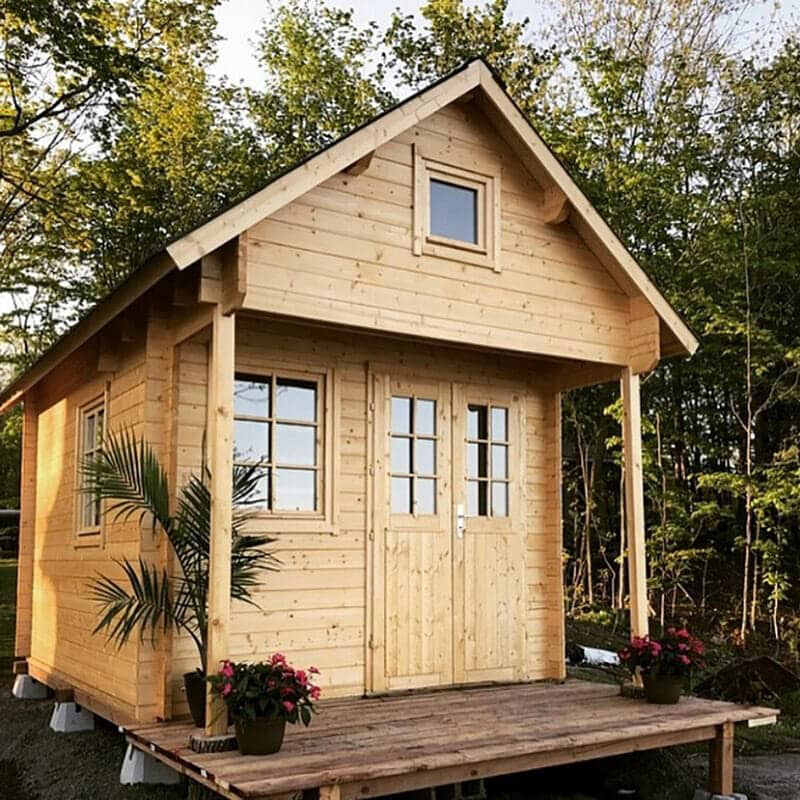
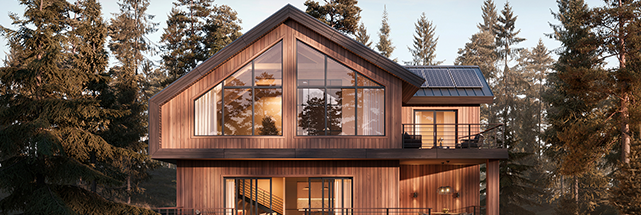
- Residential construction — ridge beams, floor beams, and portal frames in timber-frame homes frequently use glulam where solid timber sections would be impractically large.
- Tall timber buildings — glulam columns and beams form the primary structure in many mass timber buildings, including those exceeding 10 storeys.
A notable example is the Brock Commons Tallwood House in Vancouver, Canada — an 18-storey student residence completed in 2017 that used glulam columns as part of its mass timber structure, demonstrating the material's viability at genuine high-rise scale.
Glulam Grades and Specification
Glulam is classified into grades that reflect the arrangement and quality of its laminations:
| Grade (EN 14080) |
Bending Strength (MPa) |
Typical Use |
| GL20h |
20 |
Lightly loaded beams and purlins |
| GL24h |
24 |
General structural beams and columns |
| GL28h |
28 |
Heavy-span and high-load applications |
| GL32h |
32 |
Long-span roof structures and bridges |
Common European glulam strength grades under EN 14080
The suffix "h" indicates a homogeneous grade (same-quality laminations throughout), while "c" denotes a combined grade with stronger outer laminations. In North America, the equivalent classification uses combinations and stress classes defined in AITC 117.
Limitations and Considerations
Glulam is not without constraints, and understanding them is important for appropriate specification:
- Moisture sensitivity: While adhesive bonds are highly durable, repeated wetting and drying cycles can cause checking (surface cracking) and dimensional movement. Glulam used externally or in wet service conditions must be appropriately detailed and protected.
- Cost: Glulam typically costs more per unit volume than solid sawn timber, though savings in foundation loads, speed of erection, and finishing can offset this in many projects.
- Connection design: Timber connections require careful engineering, particularly at high-load joints. Steel connectors and dowels are common but must be detailed to avoid moisture traps and differential movement.
- Lead times: Custom curved or large-section glulam must be ordered well in advance, as fabrication is made-to-order in most cases.
Glulam vs. Other Engineered Wood Products
Glulam is one of several engineered timber options. Knowing when to choose it over alternatives matters:
- Glulam vs. LVL (Laminated Veneer Lumber): LVL uses thin veneer sheets and is typically used for beams and headers in residential work. Glulam offers greater flexibility in section size and is preferred for large-scale or architecturally exposed structures.
- Glulam vs. CLT (Cross-Laminated Timber): CLT has alternating grain layers and acts as a two-way structural panel — ideal for floors, walls, and slabs. Glulam is a linear element best suited to beams and columns. The two products are frequently used together in mass timber buildings.
- Glulam vs. PSL (Parallel Strand Lumber): PSL uses bonded wood strands and offers very high stiffness in small sections. It is typically more expensive than glulam and less common for long-span applications.
The Role of Glulam in the Future of Construction
As the construction industry faces increasing pressure to reduce its carbon footprint — which currently accounts for roughly 38% of global CO₂ emissions — glulam is positioned as a central material in the transition toward low-carbon building. Policy frameworks in countries including the UK, France, and Canada are actively promoting timber-first approaches in public procurement, directly increasing demand for glulam and other mass timber products.
Advances in digital fabrication, including CNC-milled joinery and parametric design software, are making it faster and cheaper to design and build complex glulam structures. Combined with growing certification of sustainably managed forests, glulam glued laminated timber stands as one of the most practical, proven, and scalable tools available for building a more sustainable built environment.

 English
 한국어
한국어 Español