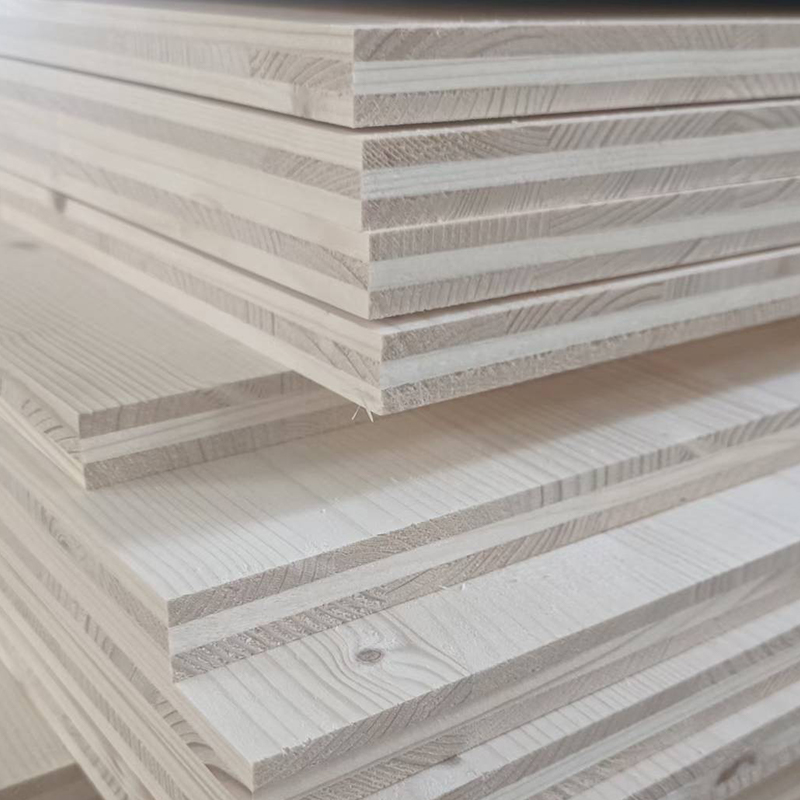
Wood wall panels bring warmth, texture, and a quiet sense of calm to a space. They also invite a fair question: what makes a wood panel genuinely sustainable? The answer is not printed on a single label. It starts in the forest, continues through milling, laminating, finishing, installation, and maintenance, and ends with what happens when the panel is eventually removed.
At Wellhouse, we have worked with engineered timber since 2011, first through glulam production and later through complete timber building packages. That experience has taught us that sustainable wood wall panels are rarely a single-product choice. They are a chain of practical decisions, and the best panel is the one that suits the building, the exposure, and the maintenance plan.
What Makes Wood Wall Panels Sustainable?
Wood is renewable, and growing trees absorb carbon dioxide. Responsibly harvested timber also stores carbon for as long as the building stands. Compared with energy-intensive wall materials, timber panels often compare favourably on embodied carbon, especially when they are produced close to the project and used without excessive processing.
But “wood” alone is not a sustainability guarantee. Four issues matter most:
- Source and species: Look for legal, traceable timber and certified forest sources where available. Fast-growing pine and spruce can relieve pressure on slower-growing species, while durable cedars suit exposed applications.
- Service life: A panel that performs for decades with simple maintenance usually has a better environmental case than a fashionable surface replaced every few years.
- Finishes and fixings: Low-VOC coatings, mechanical fixings, and repairable details make future maintenance and end-of-life separation easier.
- Detailing: Ventilation, flashing, and moisture control matter as much as the wood itself. Poor detailing shortens service life and wastes good material.
A sustainable wall panel is therefore not simply the cheapest or the most natural-looking option. It is a well-specified product that can dry, move, and age gracefully in its particular location.
Sustainable Wood Species and Finishes
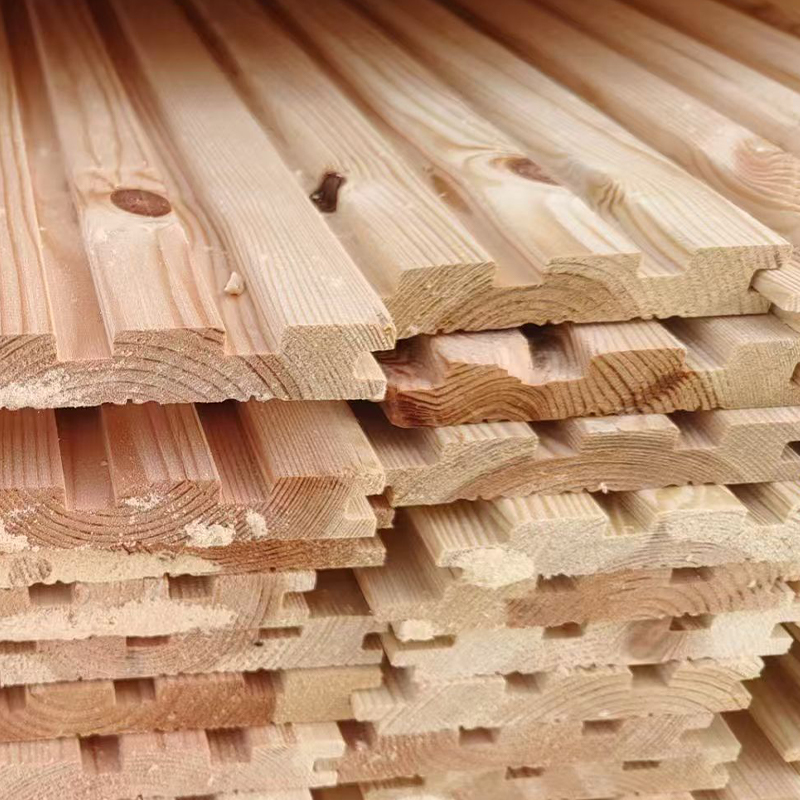
Species and surface treatment change both performance and appearance. Douglas fir offers strength and a warm, pronounced grain. Pine and spruce are widely available, easy to work, and well suited to painted or lightly coated interiors. Western red cedar brings natural decay resistance and dimensional stability, which makes it a long-standing choice for exterior cladding. Japanese sugi has a long tradition in shingles and exterior details.
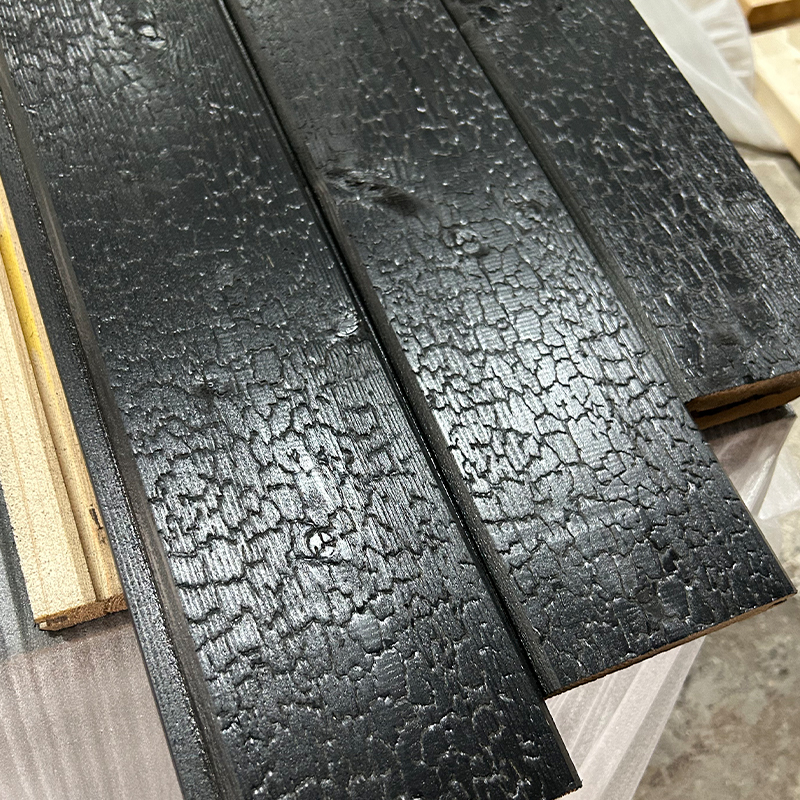
Heat-treated and charred finishes deserve attention too. Carbonised wood and shou sugi ban use controlled charring to create a durable, weather-resistant surface with a distinctive texture. These finishes can reduce reliance on chemical preservatives, but the char depth, coating, and maintenance regime still need to be specified correctly.
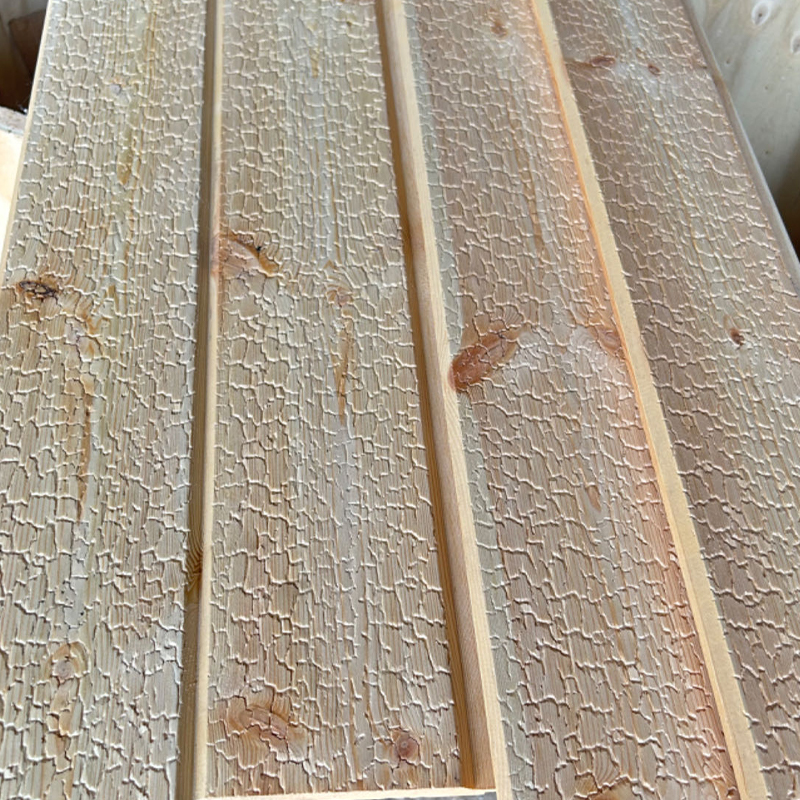 Shou Sugi Ban Charred Wood Wall PanelsCharred cedar wall panels offer deep black or smoky texture and a durable surface for wall applications; specify substrate, fire performance, and maintenance.View Product →
A simple comparison of common wood wall panel options; actual performance depends on detailing, exposure, and coating.
| Wood or finish |
Typical use |
Sustainability strengths |
Practical notes |
| Douglas fir |
Interior panelling, cladding, structural details |
Strong, long-lasting, and widely available |
Check resin content and coating compatibility |
| Pine |
Tongue-and-groove panels, cladding, mouldings |
Fast-growing, easy to repair, low embodied carbon |
Needs protection in damp or high-wear areas |
| Spruce |
Interior panels and cladding |
Lightweight, fast-growing, good strength-to-weight ratio |
Soft surface; consider a harder species for heavy traffic |
| Western red cedar |
Exterior cladding, interior feature walls |
Naturally durable and dimensionally stable |
Confirm traceable sourcing and expect colour change over time |
| Carbonised or shou sugi ban |
Feature walls, exterior accents |
Durable surface with reduced need for chemical treatment |
Char depth and texture vary; agree on samples and maintenance |
Interior or Exterior? Match the Panel to the Exposure
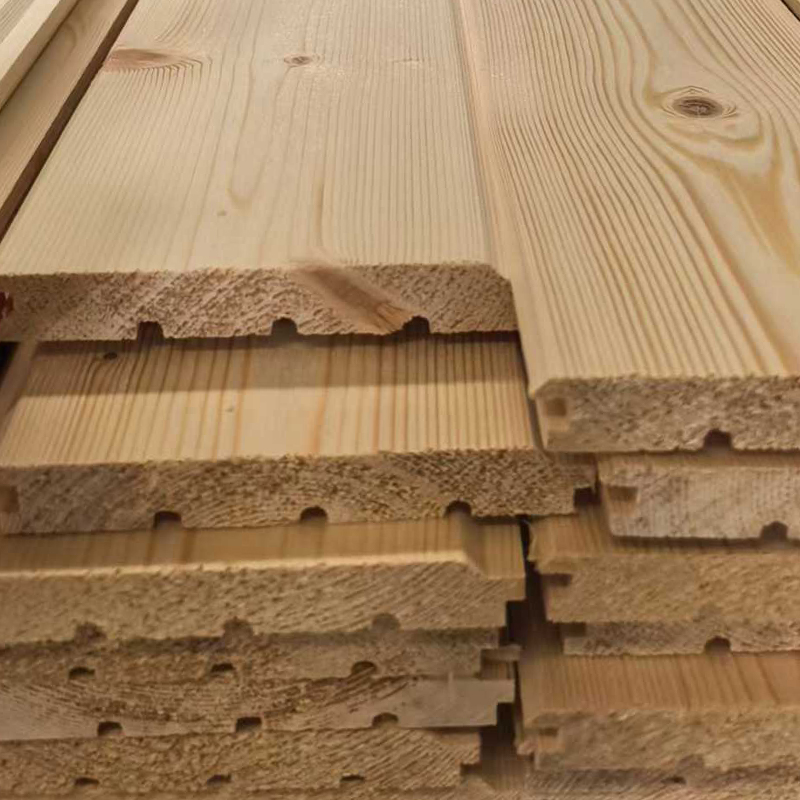
Interior wall panels have an easier life. Tongue-and-groove boards, slatted panels, and decorative wall panels are protected from rain and strong UV, so the main concerns are substrate flatness, acclimation, fire performance, and indoor air quality. A stable, well-sealed substrate and a ventilated cavity behind the boards will help the timber move without cupping. Western red cedar tongue-and-groove panelling is a practical choice where a warm, stable surface is wanted.
 Western Red Cedar Tongue and Groove Wall PanelsWarm, fine-grained cedar tongue-and-groove panelling suits interior walls where a stable, natural surface and easy finishing are wanted.View Product →
Exterior cladding is a different discipline. Rain, wind-driven moisture, and sunlight demand a proper rain-screen approach: a drainage plane, ventilated battens, corrosion-resistant fixings, and careful flashing around openings. The coating system must be breathable enough to let moisture escape and durable enough to protect the surface. Pine exterior cladding can perform well when it is detailed and maintained correctly, but it should not be treated as a maintenance-free skin.
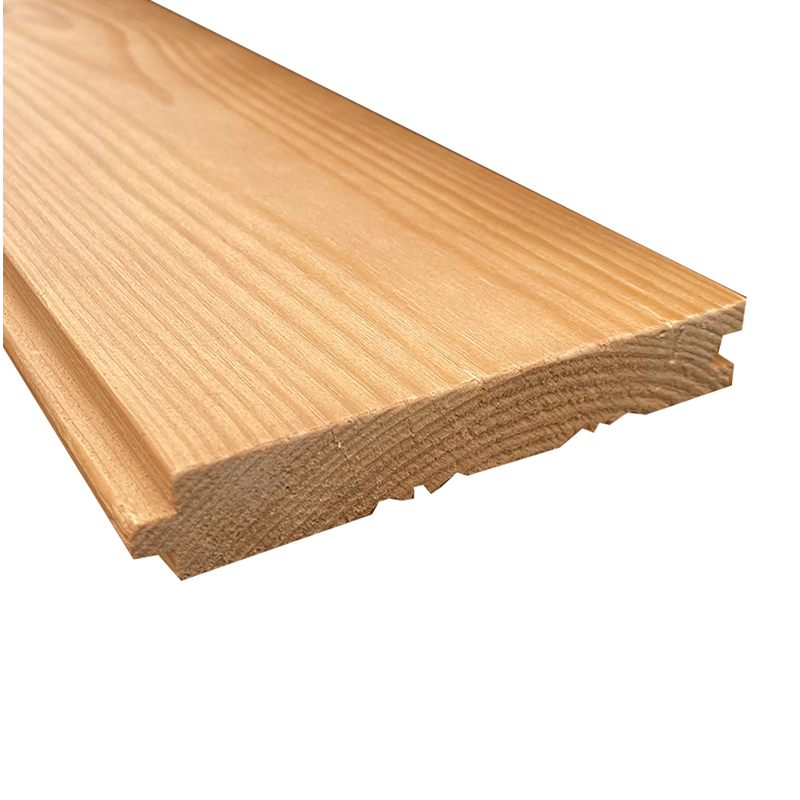 Pine Exterior Wood Wall CladdingLight, workable pine cladding is positioned for exterior facades; pair it with proper rain-screen detailing, breathable coatings, and maintenance.View Product →
In both cases, think of the panel as part of a wall assembly rather than a standalone sheet. The substrate, cavity, fixings, and finish determine how long the wood wall panel will last.
A Simple Specification Checklist
When comparing sustainable wood wall panels, a short checklist prevents most avoidable problems:
- Define whether the panel is interior, exterior, or in a wet or humid area.
- Confirm species, grade, moisture content, and dimensional tolerances.
- Ask for traceable sourcing and any available certification.
- Detail ventilation, drainage, flashing, and movement gaps.
- Choose a finish that can be repaired and maintained locally.
- Plan for future removal, reuse, or responsible disposal.
How We Approach Sustainable Wood Wall Panels
Our background is in engineered timber, not just decorative surfaces. We produce glulam and CLT components and supply timber cladding, wall panels, mouldings, garden wood, and prefabricated wooden buildings. That range helps us see a wall panel in context: how it meets the structure, how it drains, how it is fixed, and how it will be maintained.
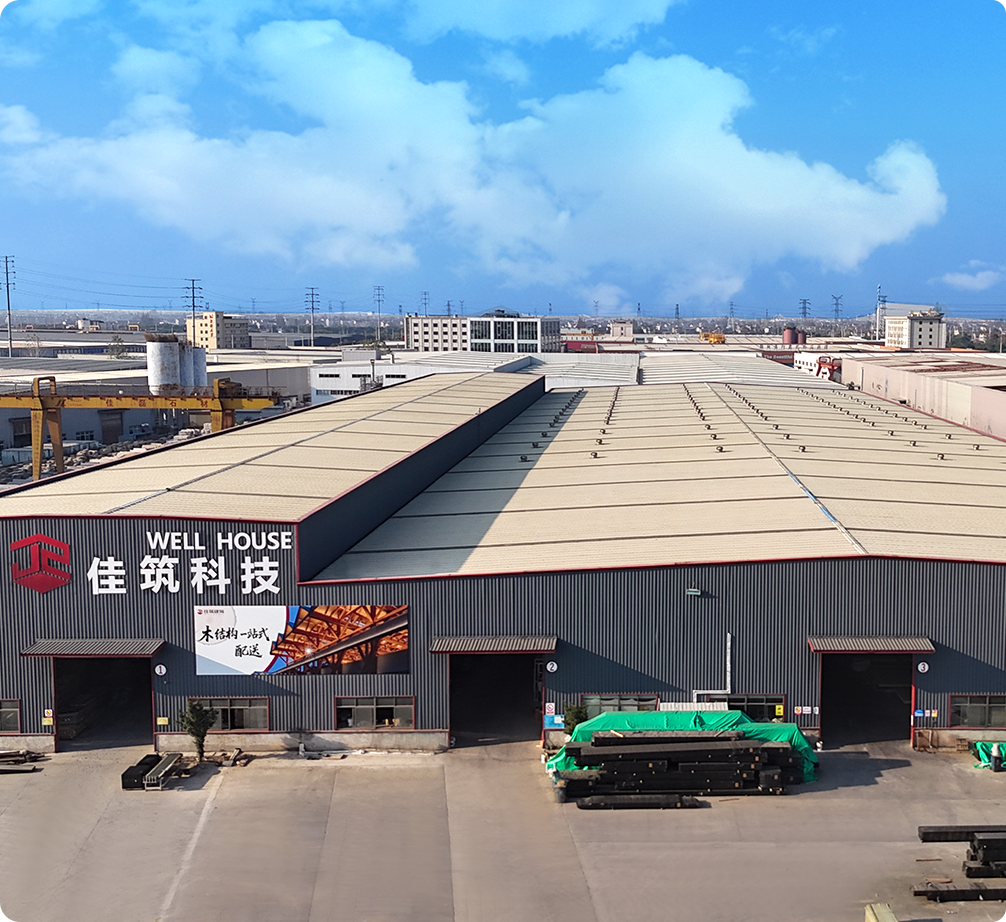
We operate two production bases and offer design, production, and installation support for timber projects. For a wall panel brief, we can help compare species, thickness, profile, coating, and fixing methods, then match those choices to the exposure and the desired appearance. You can read more on our sustainability page and learn about our story. We do not treat sustainability as a badge. It is a series of choices made at the drawing stage and carried through to the finished wall.
Common Questions We Hear
Can wood wall panels be used in bathrooms?
They can, but not as a direct wet-area surface. Use a suitable substrate, provide strong extraction and ventilation, keep the timber clear of splash zones, and choose a finish designed for humid interiors. In a shower enclosure, tile or glass is usually the safer choice.
Do wood wall panels need fire treatment?
Fire requirements depend on the building type, location, and wall assembly. Ask for test data and confirm the proposed treatment or substrate with the relevant authority. A decorative panel should not be assumed to meet a fire class without documentation.
How often will exterior panels need refinishing?
That depends on the species, coating, orientation, and climate. A typical exterior coating may need inspection every year and refinishing every few years, while naturally durable species can be left to weather if that appearance is acceptable. The key is to agree on the look and the maintenance routine before installation.
Sustainable wood wall panels are not about finding a perfect material. They are about keeping good timber in service for as long as possible, with a traceable source, a suitable finish, and details that let the wall dry and perform. Choose the species for the exposure, specify the assembly as carefully as the surface, and plan the maintenance from the start. That is how a wood wall becomes both beautiful and genuinely durable.

 English
 한국어
 Español