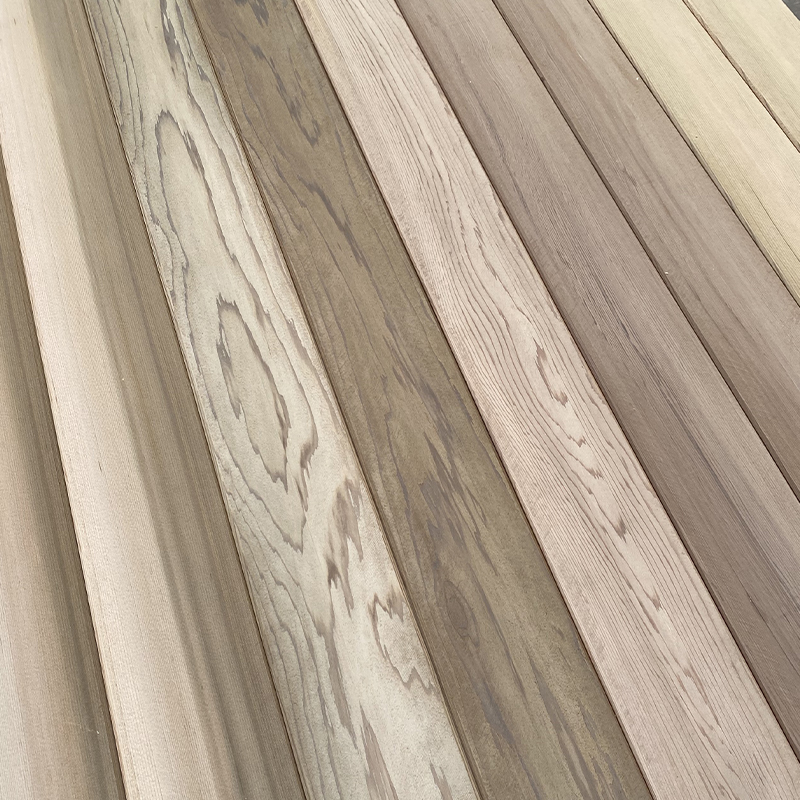
A well-made outdoor wood sign does two jobs at once: it tells people where they are, and it quietly shows that somebody cared about the details. The difficulty is that a signboard lives in the most exposed spot on any property — full sun on one face, rain running down the other, snow sitting on the top edge, and often a post standing in damp soil. We have spent well over a decade milling timber for cladding, decking and garden structures, and the same lessons keep coming back. The sign that survives is the one whose board, finish and mounting were all chosen for weather rather than for a sunny weekend.
What follows is a practical walk through species, board format, finish, lettering and fixing, written for people who would rather build the sign once.
Why Outdoor Signs Fail Faster Than Indoor Ones
Almost every failing sign can be traced back to three forces working together.
- Water. Rain and dew push moisture into end grain and joints. Once a board sits above roughly 20 percent moisture content for long enough, decay fungi have their opening.
- Sunlight. Ultraviolet light breaks down lignin at the surface, which is why untreated timber silver and develops fine surface checking within a season or two.
- Trapped moisture. A post set in soil, or a panel screwed flat against a wall, has no way to dry out. That is where rot starts — rarely in the middle of the board.
Freeze and thaw makes all three worse. Water sitting in a check or a screw hole expands as it freezes, widens the gap, and lets in more water next time. Good sign making is largely about breaking that cycle: a rot-resistant species, a board that can drain, and fixings kept above the splash line.
Choosing a Wood Species for an Outdoor Sign
Almost any wood can become a sign. Far fewer can stay one for a decade. Two properties decide it: how well the heartwood resists decay fungi, and how calmly the board behaves when its moisture content swings between a dry August and a wet November.
Relative strengths of the timber species most often used for exterior signage.
| Species |
Decay resistance |
Stability |
Best use on a sign |
| Western red cedar |
High |
Excellent |
Carved or routed face boards |
| Douglas fir |
Moderate |
Good |
Frames, headers, painted panels |
| Pressure-treated pine |
High, treated |
Fair |
Posts and ground-contact parts |
| Spruce |
Low |
Good |
Sheltered or fully painted signs |
| Merbau |
High |
Good |
Heavy-duty markers and edge frames |
Western red cedar remains our first recommendation for the visible board. The heartwood is naturally rot-resistant, it is light enough that it does not fight its fasteners, and it holds routed or carved lettering with crisp edges. It also silvers gracefully if you choose not to finish it at all.
Where the sign has to carry real load — a long panel spanning two posts, or an arched header over a gate — Douglas fir or an engineered glulam member gives you the stiffness cedar lacks, and it takes paint well when primed on every face.
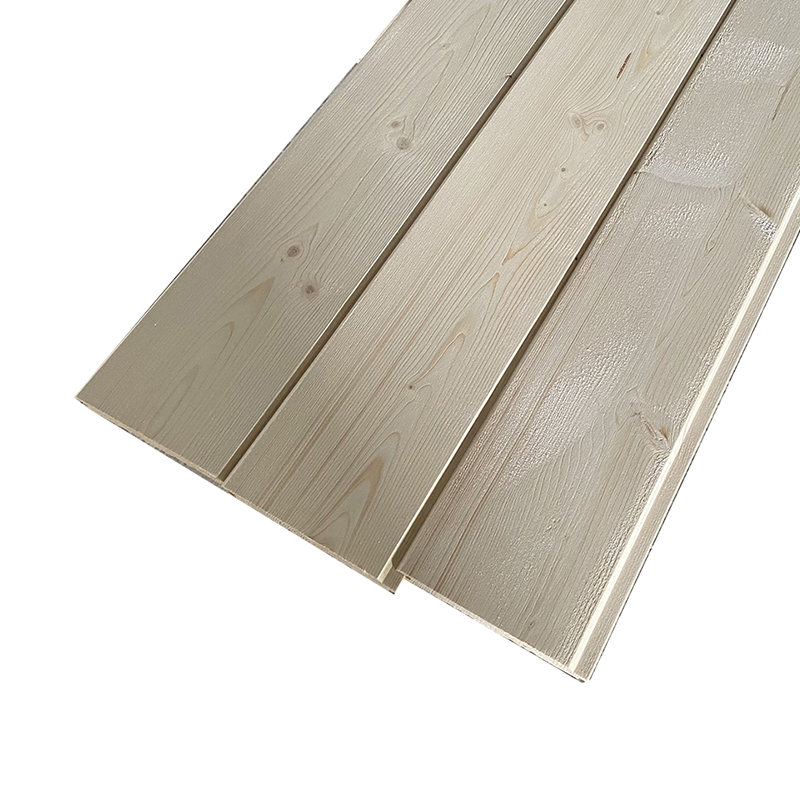
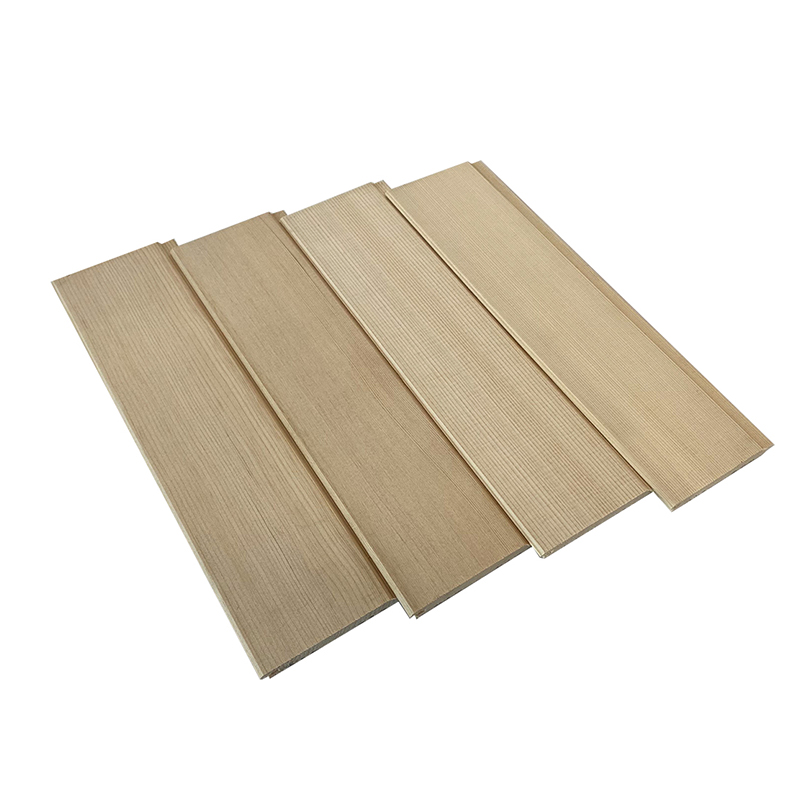
 Western Red Cedar Tongue and Groove Wall PanelFlat, dry cedar panel with clear grade and 25 mm depth, suitable for stable sign boards when grain runs horizontally.View Product →
Board Format and Surface
A sign does not need a rare piece of timber. It needs a board that is flat, dry and thick enough to stay flat. Anything under about 20 mm will cup once it is fixed on one face only, whichever species you choose. For a sign you intend to keep, 25 to 40 mm is a sensible range, with the grain running horizontally so movement happens along the length rather than against the letters.
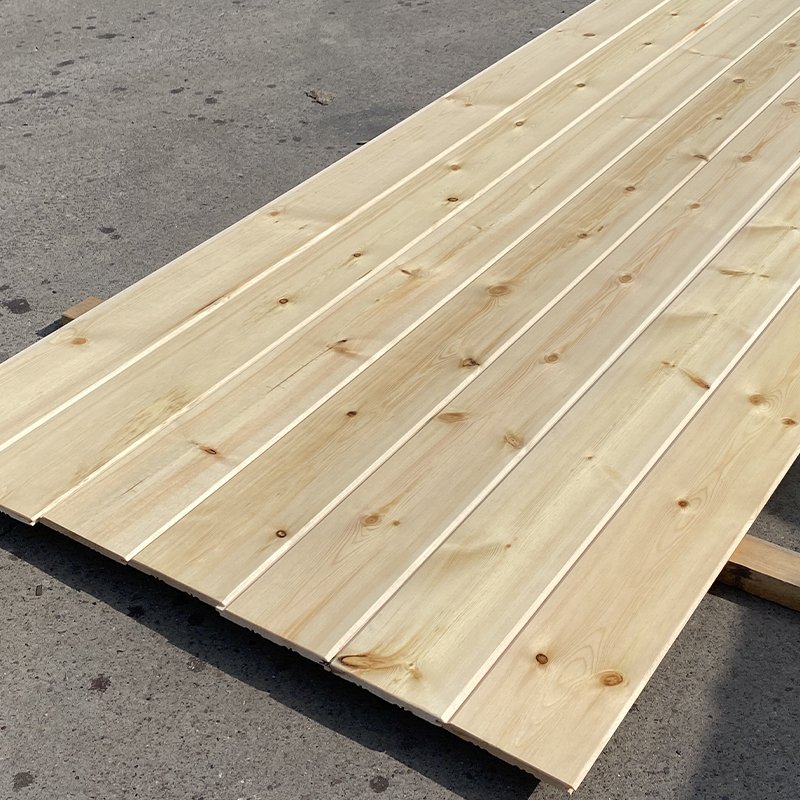
Profile matters more than most people expect. A tongue-and-groove or shiplap face reads well behind carved text and gives the panel somewhere to move. A D-log profile produces a gently curved face that catches light beautifully on a lodge or garden-room sign. Plain square-edged boards are the simplest option and the easiest to join into a wide panel.
If you want to weigh up profiles in more depth, our notes on tongue-and-groove wall panel design and installation cover the same points that matter here: joint alignment, expansion gaps, and fixing boards so they can still move.
For a sign that has to face the weather with almost no maintenance, charred timber deserves serious thought. The Japanese technique known as shou sugi ban burns the surface into a carbon layer that resists water, insects and UV, leaving a deep black texture that suits cream or gold lettering.
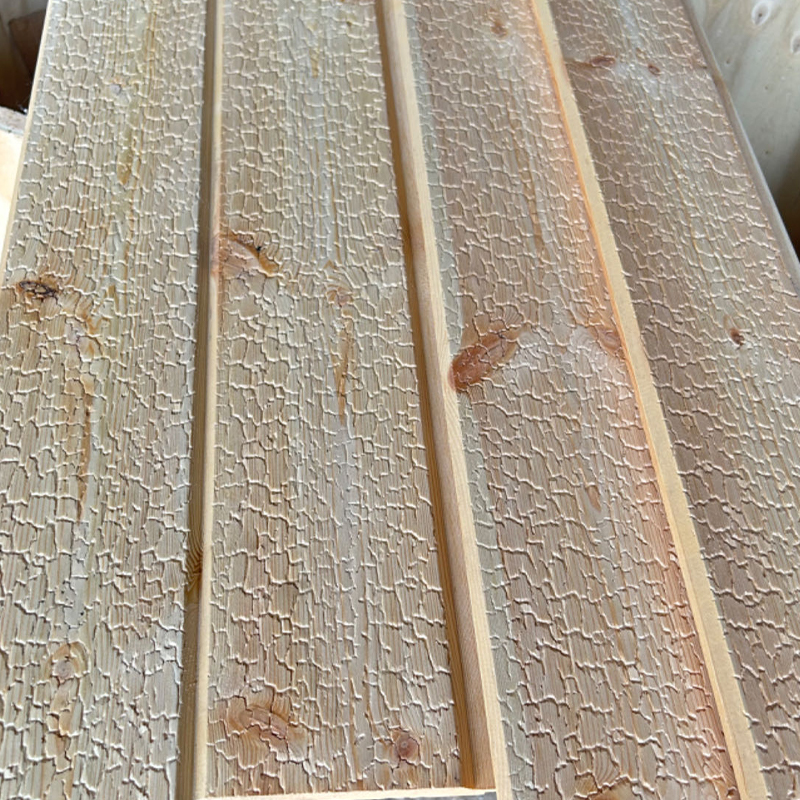 Shou Sugi Ban Charred Wall PanelCharred timber panel with carbonized surface that resists weather and insects, ideal for low-maintenance outdoor signs.View Product →
Finishing an Outdoor Sign
Most sign failures come from a finish that traps moisture instead of letting it move.
Penetrating versus film-forming finishes
Oils and stains soak into the wood, leave the surface open to breathe and are simple to refresh. They do not peel. Varnish, polyurethane and exterior lacquer sit on top of the timber, look superb for a year, then crack along the grain and hold water against the wood. If you want that level of gloss, choose a flexible marine product and accept the maintenance that comes with it.
Paint, stain and lettering
Paint works well on stable species such as spruce or Douglas fir, provided you prime all four edges and not only the face. A pigmented oil keeps the grain visible while slowing the silvering. Letters should be routed or carved and filled with exterior enamel — applied plastic letters are usually the first thing to fall off.
Mounting a Sign So Water Cannot Settle
The best board in the world will rot in a few years if it sits in soil or is fixed hard against a wall. Two rules cover most of it: the sign should be able to dry on every face, and the post should never carry water up into the panel.
Posts and frames
Pressure-treated timber is the right material for anything touching the ground, which is why it is standard for fence posts and garden structures. Set posts in a gravel collar or concrete above the soil line, cap or slope the top of the post so rain runs off, and keep the bottom edge of the sign well clear of the splash zone.
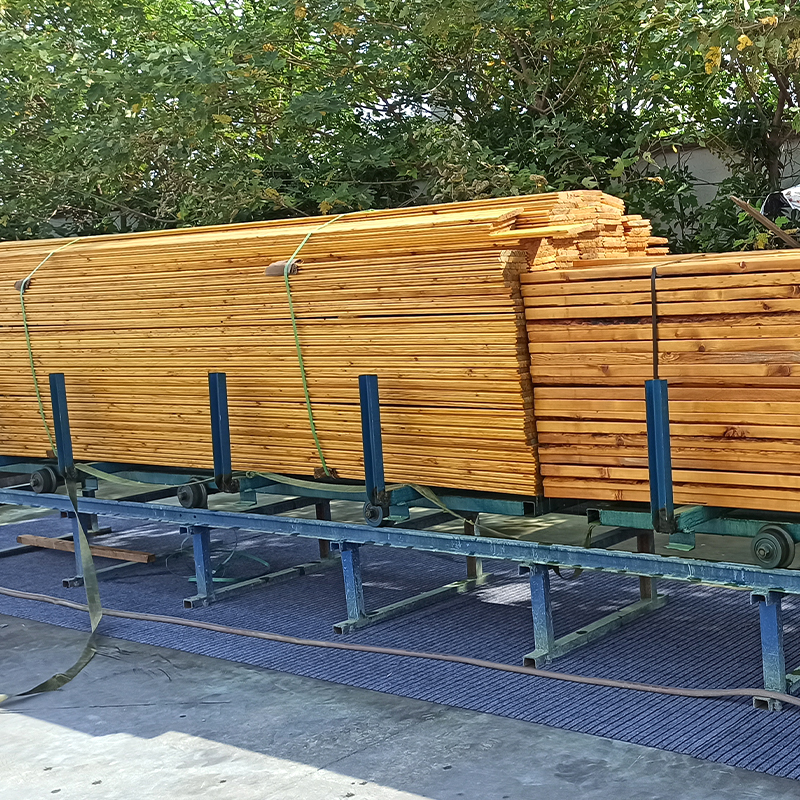 Pine Pressure Treated WoodPressure-treated pine lumber rated for ground contact, offering long-term durability for sign posts and outdoor structures.View Product →
Fixings and hardware
Stainless steel screws and bolts are not an indulgence. Galvanised and zinc-plated fixings corrode, stain the timber and eventually fail. Where a sign hangs on a wall, fit small spacers behind it so air can move across the back face, and drill slotted holes rather than tight ones so the board can expand without splitting.
Outdoor Sign Ideas That Age Well
Some designs simply hold up better outdoors than others. These are the ones we see working year after year.
- A carved cedar house-number board, oiled and mounted on two stainless standoffs.
- A farm or ranch gate sign cut from 40 mm Douglas fir, with routed rather than applied letters.
- A charred panel with hand-painted cream lettering for a contemporary garden entrance.
- A D-log profile welcome sign, echoing the log buildings behind it.
- A long horizontal tongue-and-groove panel for a winery or trailhead, framed in treated timber.
The pattern is consistent: solid boards, cut lettering, timber that resists decay, and a mounting detail that keeps the panel dry.
Sourcing Boards You Can Trust
Most sign projects need only a small quantity of material, but the quality of that material decides everything. Moisture content should be checked before you cut, not after the sign has cupped. Boards should be straight, free of large knots near the edges, and graded for the exposure they will face. That is the standard we hold ourselves to, and you can read more about it on our quality page.
Because our own production covers timber cladding, garden wood and engineered glulam, we can usually match a sign project with the right board rather than the nearest one: cedar or spruce for the visible panel, pressure-treated pine for posts, and a durable hardwood for frames and edges.
And if the sign is part of a larger outdoor build — a gate, a pergola, a deck or a garden room — it is often worth choosing one timber family for the whole scheme so the colour and finish age together.
An outdoor wood sign is a small piece of construction, and it rewards the same thinking as any other exterior timber work: a species with natural resistance, a board that can breathe, a structure kept clear of the ground, and fixings that will still be there in ten years. Do that, and the sign stops being a maintenance item and becomes part of the place.


 English
 한국어
 Español