Introduction: Cross Laminated Timber is Revolutionizing Construction
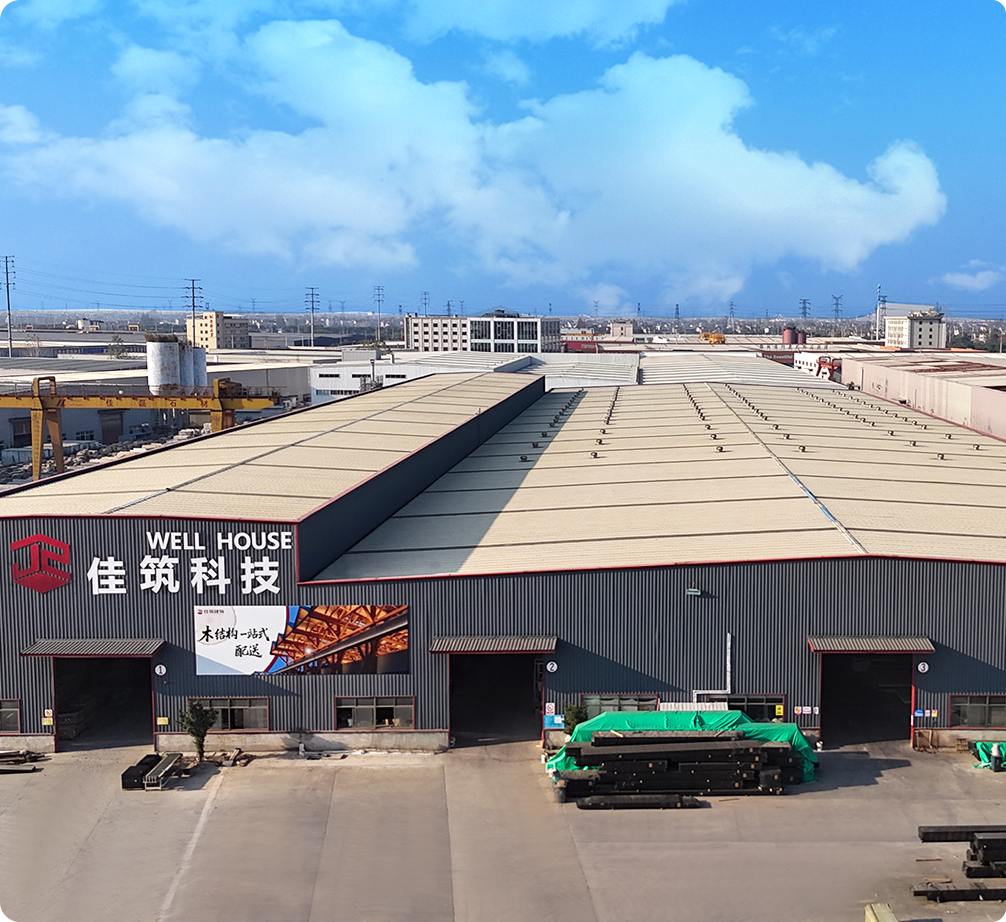
In recent years, there has been an increasing demand for eco-friendly, sustainable building materials that don’t compromise on performance or design flexibility. Cross Laminated Timber (CLT) has emerged as a groundbreaking solution, reshaping the construction industry. Unlike traditional construction materials, CLT is a versatile engineered wood product that provides strength, flexibility, and sustainability in one package. Manufactured by Nantong Wellhouse Architectural Technology Co., Ltd., CLT is quickly gaining traction in both residential and commercial construction, offering a new, greener way to build.
The innovation lies in how CLT is constructed: it’s made by stacking layers of kiln-dried timber boards, cross-laminated at right angles, which enhances its strength in multiple directions. With the ability to create large panels up to 60 feet long, CLT’s potential is limitless, allowing builders to create structures that were previously only possible with heavier materials like concrete or steel.
This image was generated by AI
What is Cross Laminated Timber (CLT)?
At its core, CLT is a wood product that combines sustainability with cutting-edge engineering. By cross-laminating layers of timber, each layer rotated 90° to the one below, the resulting panel becomes incredibly rigid and stable. This unique construction method gives CLT its multi-directional strength, making it a superior choice for building high-rise buildings, multi-story residential complexes, and even long-span structures like auditoriums.
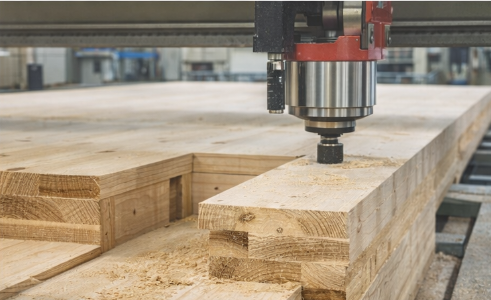
Typically made with 3, 5, or 7 layers of wood, CLT panels can be manufactured in large dimensions, up to 60 feet in length and 10 feet in width. These panels are not only structurally strong but also highly customizable. Using precision CNC machines, manufacturers can cut these large panels to exact specifications, including creating openings for windows and doors, ensuring that every piece of CLT fits perfectly within a building’s design.
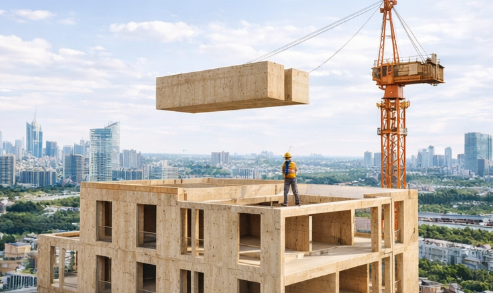
One of the main draws of CLT is its high strength-to-weight ratio. It is strong enough to support multi-story buildings yet far lighter than concrete or steel, making it ideal for modern construction where efficiency and speed are paramount.
This image was generated by AI
Why CLT Is a Game-Changer for the Construction Industry
High Strength-to-Weight Ratio: Stronger and Lighter Than Traditional Materials
One of the standout features of Cross Laminated Timber is its high strength-to-weight ratio. Traditional building materials like concrete and steel are known for their strength but come at a cost: they are heavy, difficult to transport, and require extensive labor to install. CLT, on the other hand, provides an equally strong structural element but is significantly lighter. This means that the panels are easier to transport and handle, and they can be installed quickly, reducing on-site labor and construction time. The high strength-to-weight ratio allows CLT to be used in a wide range of applications, from multi-story residential buildings to large commercial spaces and even public infrastructure.
Fast Installation: Minimizing On-Site Labor and Waste
The prefabrication process used to create CLT panels allows for faster installation than traditional construction methods. Because the panels are manufactured off-site, much of the work that would otherwise be done on-site is already completed. This reduces the need for on-site labor, making the construction process faster, more efficient, and less costly. With pre-cut panels ready for assembly, builders can assemble CLT buildings in a fraction of the time it takes to complete conventional construction projects. Additionally, because the panels are prefabricated, there is less material waste, which also has a positive impact on the environment.
This image was generated by AI
Sustainability: CLT as a Green Building Solution
As more cities and countries set ambitious goals to reduce carbon emissions and promote sustainable building practices, CLT is becoming the go-to material for eco-conscious construction. Unlike steel and concrete, which are energy-intensive to produce, CLT is made from renewable wood, which absorbs carbon dioxide from the atmosphere. This makes CLT a carbon-negative material, meaning that it actually helps reduce the amount of carbon dioxide in the atmosphere.
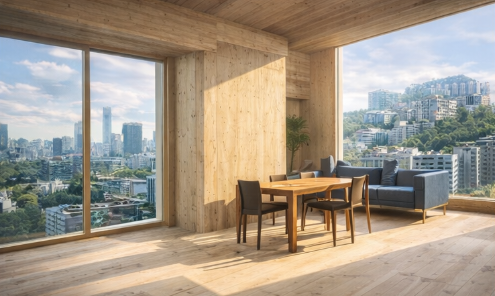
CLT’s sustainable nature doesn’t just benefit the environment—it also contributes to creating healthier indoor environments. CLT is naturally hypoallergenic, and its ability to regulate humidity in buildings helps create comfortable and healthy spaces. This makes it an ideal choice for schools, hospitals, and residential buildings where indoor air quality is important.
This image was generated by AI
Performance Under Extreme Conditions: Fire & Seismic Resistance
Fire Resistance: Stronger than Expected
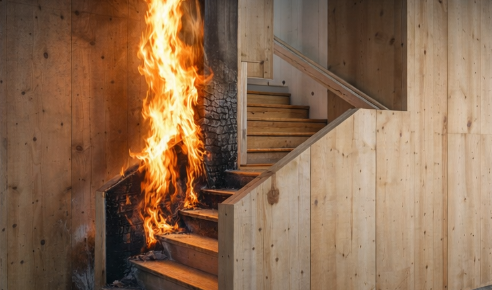
While it might seem counterintuitive, wood is naturally fire-resistant when used in the right applications. CLT has been shown to perform well in fire tests, as it chars on the outside when exposed to flames, creating a protective layer that slows down the fire’s spread. Additionally, CLT panels can be treated to meet specific fire ratings, ensuring that they are as safe as, if not safer than, other building materials.
Seismic Performance: Built for Safety
CLT's strength in multiple directions also makes it highly effective in earthquake-prone areas. The cross-lamination technique gives CLT panels the ability to withstand significant forces from different directions, making it a reliable material for seismic zones. The flexibility and strength of CLT make it ideal for buildings in regions prone to earthquakes, ensuring safety and structural integrity.
Common Applications of Cross Laminated Timber (CLT)
Cross Laminated Timber’s versatility makes it suitable for a wide range of applications in both residential and commercial construction. Some of the most common uses include:
- Walls, Floors, and Roofs in Residential and Commercial Buildings: CLT’s structural integrity allows it to be used in all parts of a building, providing strength and stability to walls, floors, and roofs. It’s also used as cladding in some building designs.
- Long-Span Structures: CLT is perfect for long-span structures such as auditoriums, gymnasiums, and sports halls, where large, uninterrupted open spaces are needed.
- Hybrid Systems: CLT panels are often used in combination with glulam beams to create hybrid systems that offer the benefits of both materials.
- Modular and Prefabricated Construction: The fast installation and lightweight nature of CLT make it an excellent choice for modular and prefabricated construction, where off-site manufacturing is combined with on-site assembly.
Why Choose CLT for Your Next Project?
The key differentiator between CLT and glulam is the direction in which the wood layers are oriented. While glulam laminates run in the same direction, CLT’s layers are cross-oriented, giving it superior strength and stability. This makes CLT more versatile and applicable for a broader range of projects, from high-rise buildings to public infrastructure.
For businesses, including developers, contractors, and architects, CLT offers a future-forward solution that not only meets the structural demands of modern buildings but also aligns with the growing trend of sustainable construction. By opting for CLT, you're choosing a material that not only performs well but also contributes to a greener planet.
Nantong Wellhouse Architectural Technology Co., Ltd., a leading manufacturer and supplier of mass timber solutions, is at the forefront of this green building movement, offering high-quality Cross Laminated Timber that meets all industry standards. With a commitment to sustainability and innovation, the company provides customers with CLT products that combine strength, efficiency, and environmental responsibility.



 English
 한국어
한국어 Español