Understanding Baseboard Molding: The Silent Hero of Interior Decor
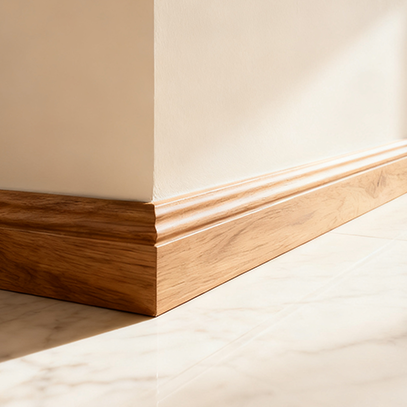
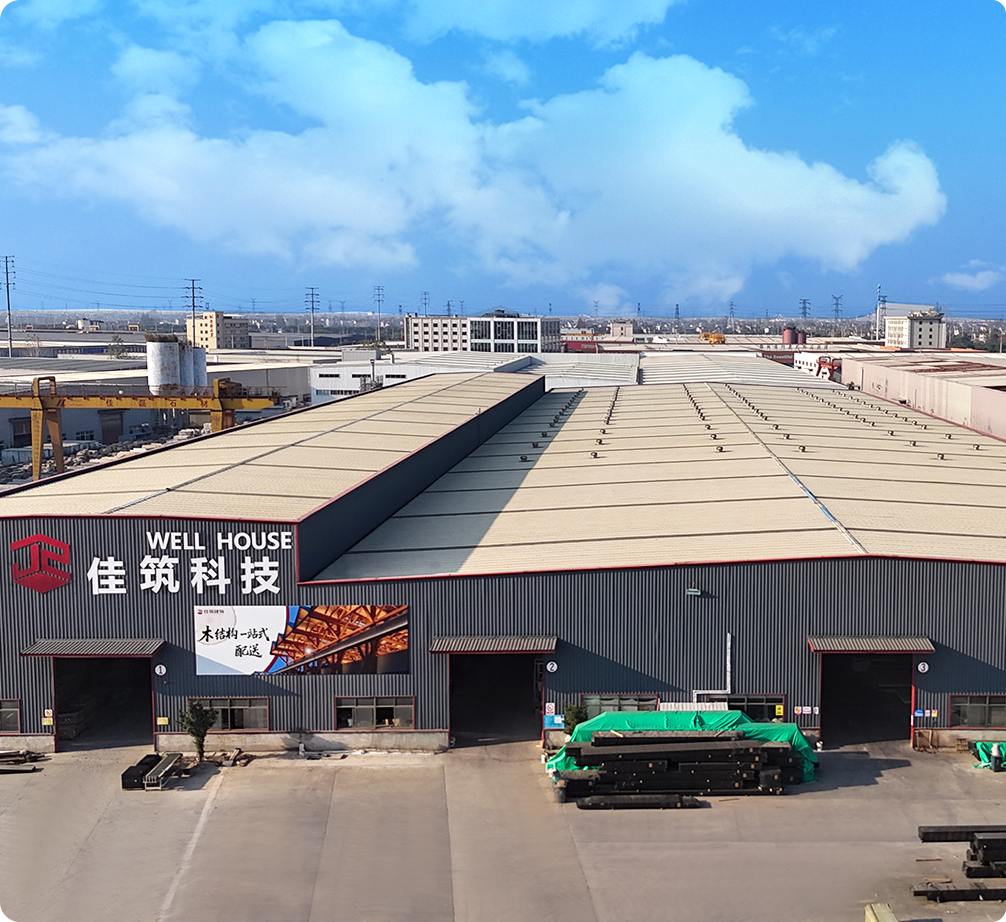
Baseboard Molding, commonly referred to as skirting or floor molding, is an indispensable architectural element in interior design. Located at the intersection of walls and floors, it serves the dual purpose of visual transition and physical protection. As a company dedicated to green building and sustainable development concepts, Nantong Wellhouse Architectural Technology Co., Ltd. has deep expertise in the research, development, and production of high-quality timber structure products, recognizing how these details elevate the overall texture of a space.
Why Every Room Needs Baseboard Molding
Visual Transition and Edging: Baseboard Molding perfectly covers the expansion gaps between the flooring and the wall. This connection makes the interior space look seamless and reflects exquisite construction craftsmanship. Wall Base Protection: In daily life, corners are highly susceptible to impact from brooms, mops, or furniture movement. High-strength Baseboard Molding provides a solid physical barrier for the bottom layer of the wall. Hiding Wiring: Some specially designed Baseboard Molding features internal grooves that can cleverly hide wires or data cables, keeping the interior tidy.
Core Parameter Comparison of Baseboard Molding
To ensure you choose the most suitable solution for your renovation or construction project, below is a comparison of the core performance parameters of different specifications and materials for Baseboard Molding. Nantong Wellhouse Architectural Technology Co., Ltd. utilizes industry-leading equipment such as the German K2i machining center and KUKA robotic arms to ensure that every timber component produced reaches extremely high dimensional accuracy (with error controlled within plus or minus 0.1mm).
| Key Parameters |
Solid/Finger-Jointed Wood |
MDF (Medium Density Fiberboard) |
PVC/Polyurethane |
| Durability |
Extremely high, great structural strength |
Medium, prone to moisture expansion |
High, completely waterproof |
| Environmental Grade |
Meets green building standards |
Depends on adhesive standards |
Industrial synthetic material |
| Decorative Effect |
Natural wood grain, high-end texture |
Flat, suitable for solid painting |
Diverse shapes, lighter texture |
| Impact Resistance |
Strong, difficult to break |
Average, prone to collapse on impact |
Good, possesses toughness |
| Maintenance Difficulty |
Low, can be sanded and refinished |
Medium, hard to repair after moisture |
Extremely low, just wipe with a cloth |
| Common Height |
3.5" - 7" (Customizable) |
3" - 5.5" |
3" - 4.5" |
Through the professional production lines of Nantong Wellhouse Architectural Technology Co., Ltd.—including the Bohai integrated finger-jointing line and multiple glulam presses—we achieve a monthly production capacity of approximately 2,000 cubic meters. This ensures stable delivery and high-quality uniformity for large-scale Baseboard Molding orders.
Common Material Classifications for Baseboard Molding
When selecting Baseboard Molding, the choice of material not only affects the aesthetic style of the interior but also directly relates to the service life and environmental performance of the decorative lines. Nantong Wellhouse Architectural Technology Co., Ltd. focuses on the R&D and production of timber structure products, providing the market with structurally stable and high-performance timber component solutions.
Solid and Finger-Jointed Wood
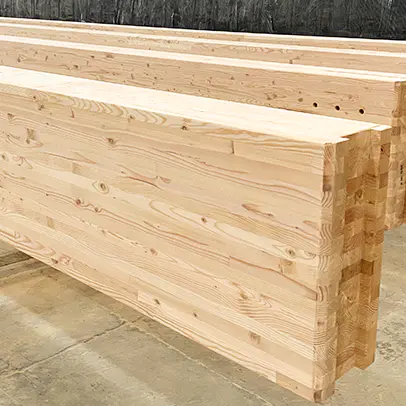
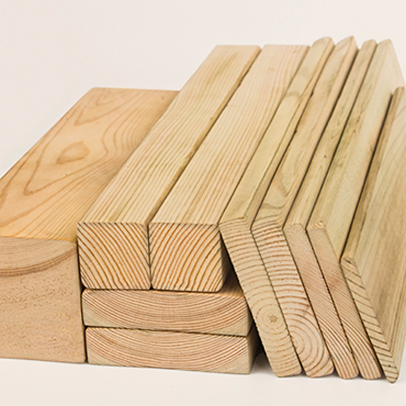
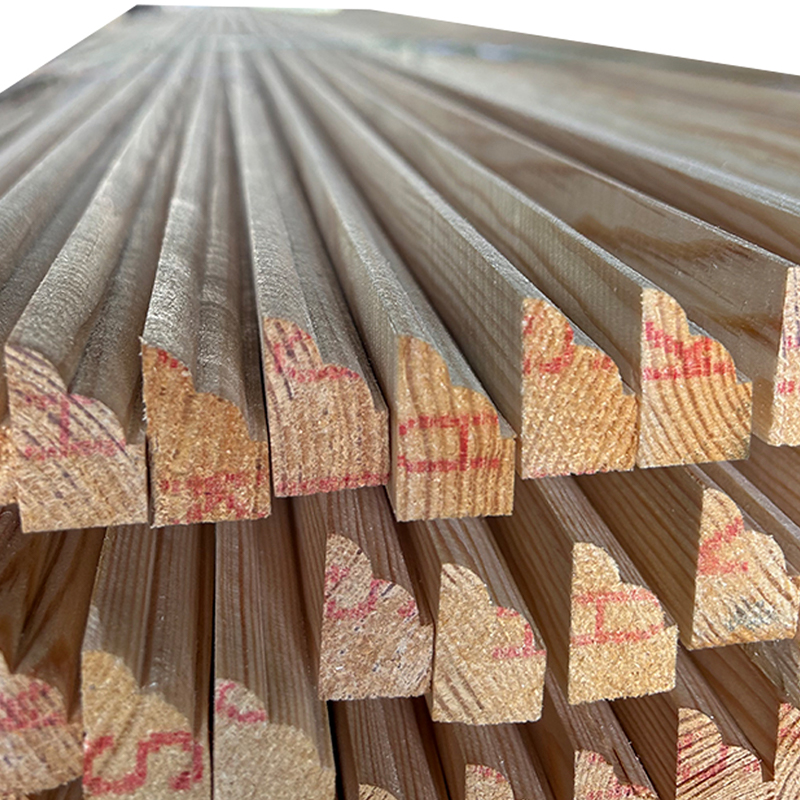
Solid wood Baseboard Molding is the first choice for those seeking natural texture and high-end decoration. To improve wood utilization and enhance structural stability, finger-jointing technology is widely applied. Nantong Wellhouse Architectural Technology Co., Ltd. has a monthly finger-jointing capacity of approximately 2,000 cubic meters. Through precise finger-jointing technology, we eliminate internal growth stresses in the wood, ensuring that the produced Baseboard Molding does not easily twist or deform even in long sections.
Medium Density Fiberboard (MDF)
MDF is a cost-effective alternative for Baseboard Molding. It is made from wood fibers and resin, with an extremely flat surface free of grains or knots. While it is excellent for painting in various colors, it is slightly inferior to professionally treated timber components in terms of water resistance and structural strength.
PVC and Polyurethane
These Baseboard Molding types made from high-molecular materials are mainly used in humid environments. They possess excellent waterproof and mildew-proof properties, but compared to wood, they lack a natural, warm feel.
Material Core Performance Comparison Table
To help you understand the technical differences more intuitively, here is a comparison based on physical properties and processing techniques. Nantong Wellhouse Architectural Technology Co., Ltd. relies on the German K2i machining center and KUKA robotic arms to ensure timber products have an overwhelming advantage in complex modeling and high-precision processing.
| Performance Indicator |
Finger-Jointed Wood (Wellhouse Core) |
Solid Wood |
MDF |
Synthetic (PVC) |
| Warp Resistance |
Excellent (Stress eliminated) |
Average (Humidity sensitive) |
Good (No grain direction) |
Excellent |
| Processing Accuracy |
plus or minus 0.1mm (K2i Machining) |
plus or minus 0.5mm |
plus or minus 0.3mm |
plus or minus 0.5mm |
| Eco Index |
Extremely High |
Extremely High |
Medium |
Average |
| Nail-holding Power |
Strong |
Strong |
Weak |
Average |
| Service Life |
30+ Years |
20-50 Years |
5-15 Years |
15-20 Years |
The production process at Nantong Wellhouse Architectural Technology Co., Ltd. strictly follows green building principles. We are equipped with Taiwanese four-sided planers and 9 glulam presses, ensuring every piece of Baseboard Molding undergoes rigorous structural strengthening before entering the machining center.
How to Choose the Style of Baseboard Molding for Your Home
Choosing a Baseboard Molding style is not just an aesthetic decision; it is a precise control of spatial proportions. Nantong Wellhouse Architectural Technology Co., Ltd. insists on using advanced equipment—such as Taiwanese four-sided planers and German K2i machining centers—to carve every inch of the Baseboard Molding lines, ensuring perfection in both minimalist and complex designs.
Common Baseboard Molding Design Styles
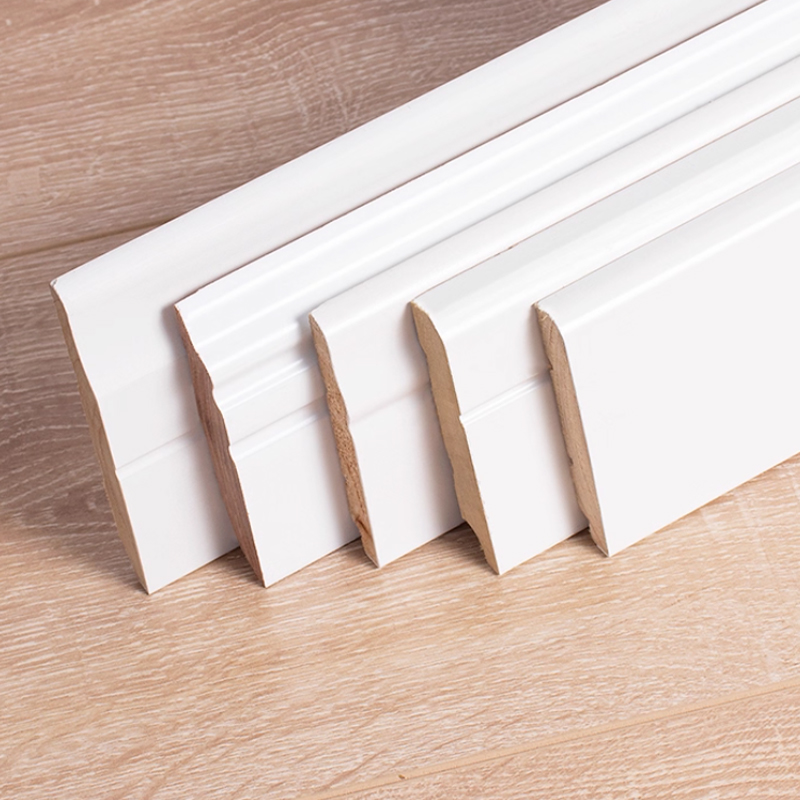
Modern/Minimalist: This style of Baseboard Molding emphasizes extreme simplicity, usually featuring flat edges or slightly eased edges. It blends into modern minimalist floors and walls. Traditional/Colonial: Features elegant Ogee curves or multi-tiered stepped edges. This type of Baseboard Molding is usually taller and creates a sense of history and solemnity. Craftsman/Shaker: Emphasizes flat, thick geometric feels. This Baseboard Molding has clear lines and no complex carvings, showcasing the structural aesthetics favored by Nantong Wellhouse Architectural Technology Co., Ltd. Decorative Layering: Adding a Base Cap to the top of basic Baseboard Molding allows for flexible adjustment of visual levels.
Proportion Principles: Matching Height with Ceiling Height
To prevent Baseboard Molding from appearing too heavy or too thin, designers often follow the "7 percent rule," where the height of the skirting is approximately 7 percent of the room's ceiling height. Nantong Wellhouse Architectural Technology Co., Ltd. can provide customized specifications for different architectural heights.
| Ceiling Height |
Recommended Baseboard Height |
Style Inclination |
| 8 Feet (approx. 2.4m) |
3" - 5" |
Modern / Minimalist |
| 9 Feet (approx. 2.7m) |
5" - 7" |
Transitional / Modern Farmhouse |
| 10 Feet+ (3m+) |
7" - 10"+ |
Traditional / Luxury Style |
Color and Finishing Solutions for Baseboard Molding
The choice of color and sheen level is the final step in giving Baseboard Molding its soul. Nantong Wellhouse Architectural Technology Co., Ltd. ensures a high level of surface flatness through Taiwanese four-sided planers, providing an ideal base for painting.
Classic Color Strategies
The Classic White: The most popular option, white Baseboard Molding provides a clean contrast that makes wall colors pop. Monochromatic Look: Painting the Baseboard Molding the exact same color as the wall to visually extend the ceiling height. Dark Contrast: Using black or dark wood Baseboard Molding to frame the space with a sophisticated architectural feel.
Paint Sheen Selection Parameters
Sheen is a core technical parameter. The higher the gloss, the denser the coating and the stronger the stain resistance.
| Sheen Level |
Reflectivity |
Washability |
Recommended Scenario |
| Matte/Flat |
0 - 5 percent |
Lower |
Minimalist styles. |
| Satin |
25 - 35 percent |
Higher |
Modern, silky texture. |
| Semi-Gloss |
35 - 70 percent |
Excellent |
Industry standard for Baseboard. |
| High-Gloss |
85 percent+ |
Extremely High |
Highlighting architectural outlines. |
Installation Steps and Techniques for Baseboard Molding
Installing Baseboard Molding is a precision task. Nantong Wellhouse Architectural Technology Co., Ltd. adheres to high-precision processing, utilizing KUKA robotic arms to ensure every timber component has extreme geometric stability.
Measurement and Marking
Precise measurement of every wall is mandatory. Products from Nantong Wellhouse Architectural Technology Co., Ltd. have excellent structural strength, suitable for long-span installations, effectively reducing joints.
Cutting Craft: Miter vs. Cope
Miter Joint: Cutting two pieces of Baseboard Molding at 45-degree angles. Fast, but gaps may appear if walls aren't perfectly square. Coping Joint: Cutting the end of one piece to follow the profile of the other. This is the professional choice recommended for woodworkers to accommodate building movement.
Installation Technical Parameters
| Step |
Parameter Index |
Professional Advice |
| Nail Pressure |
70 - 100 PSI |
Adjust based on Baseboard Molding hardness. |
| Nail Gauge |
18-gauge Brad Nails |
Length should be 2.5x the molding thickness. |
| Spacing |
Every 16" |
Nails must enter the vertical studs. |
| Gap Tolerance |
Less than 1/32" |
Achieve near-seamless joints with Wellhouse materials. |
Maintenance and Refurbishing Your Baseboard Molding
High-quality installation is only the beginning. Nantong Wellhouse Architectural Technology Co., Ltd. considers weather resistance during R&D. Baseboard Molding produced on our integrated finger-jointing lines is more stable than ordinary solid wood, reducing the risk of cracking due to humidity changes.
Daily Cleaning and Care
Dry Dusting: Use microfiber cloths. Wet Cleaning: Use neutral detergents. Timber components from Nantong Wellhouse Architectural Technology Co., Ltd. have high surface smoothness, making dust less likely to adhere.
Repair Parameters for Common Damage
| Damage Type |
Suggested Material |
Repair Depth |
| Minor Scratches |
Touch-up pen / Wax |
Less than 0.5mm |
| Dents/Impacts |
Wood Filler |
1mm - 5mm |
| Expansion Gaps |
Acrylic Caulk |
Less than 3mm |
FAQ
Q: Why is finger-jointed wood better than pure solid wood for long Baseboard Molding?
A: Pure solid wood is prone to warping at long lengths. Nantong Wellhouse Architectural Technology Co., Ltd. uses finger-jointing to eliminate stress, making the molding longer and straighter while maintaining a wood feel.
Q: Can wood Baseboard Molding be used in kitchens and bathrooms?
A: Yes, provided there is excellent sealing. Our glulam products are stable enough for dry areas in bathrooms when finished with high-density semi-gloss or high-gloss paint.
Q: How do you ensure uniformity for large-scale installations?
A: We are equipped with German K2i machining centers and 9 glulam presses, with a monthly capacity of 2,000 cubic meters, ensuring minimal error across batches of Baseboard Molding.
Q: How does Shoe Molding work with Baseboard Molding?
A: Shoe molding is nailed to the bottom of the Baseboard Molding. It adds aesthetic layers and adapts to floor fluctuations to ensure a visual seal.


 English
 한국어
한국어 Español