D-Log Siding Design Flexibility and Architectural Application
D-Log Siding is no longer a purely aesthetic façade element that simply imitates traditional log construction. In contemporary timber architecture, it has become a multi-dimensional design system that merges structure, performance, sustainability, and expression. The true value of D-Log Siding lies not only in its visual warmth or its evocation of heritage building traditions, but in the extraordinary degree of flexibility it offers across architectural styles, construction typologies, and project scales. Design flexibility is not an abstract concept; it is a tangible capability that influences how we shape space, articulate form, respond to environmental context, and integrate technical systems into built structures. In modern architecture, surfaces speak. Façades convey identity, communicate function, and express relationships between structure and environment. D-Log Siding functions as both envelope and narrative: it allows us to draw from historical timber architecture while deploying advanced engineered wood technologies that support contemporary performance expectations. This dual identity gives D-Log Siding a unique role in design, enabling us to adapt to a wide range of project goals—from rustic residential environments to highly refined commercial and civic structures. What distinguishes D-Log Siding from conventional cladding systems is not simply the rounded or semi-circular log profile, but the precision with which design variables can be controlled. Profile geometry, module size, surface texture, finish treatment, color, joint articulation, and structural integration can all be calibrated to suit specific architectural intents. This allows us to treat D-Log Siding as a compositional tool rather than a fixed product. We are not constrained to a single visual language; we are free to construct varied narratives that respond to climate, culture, program, and site.
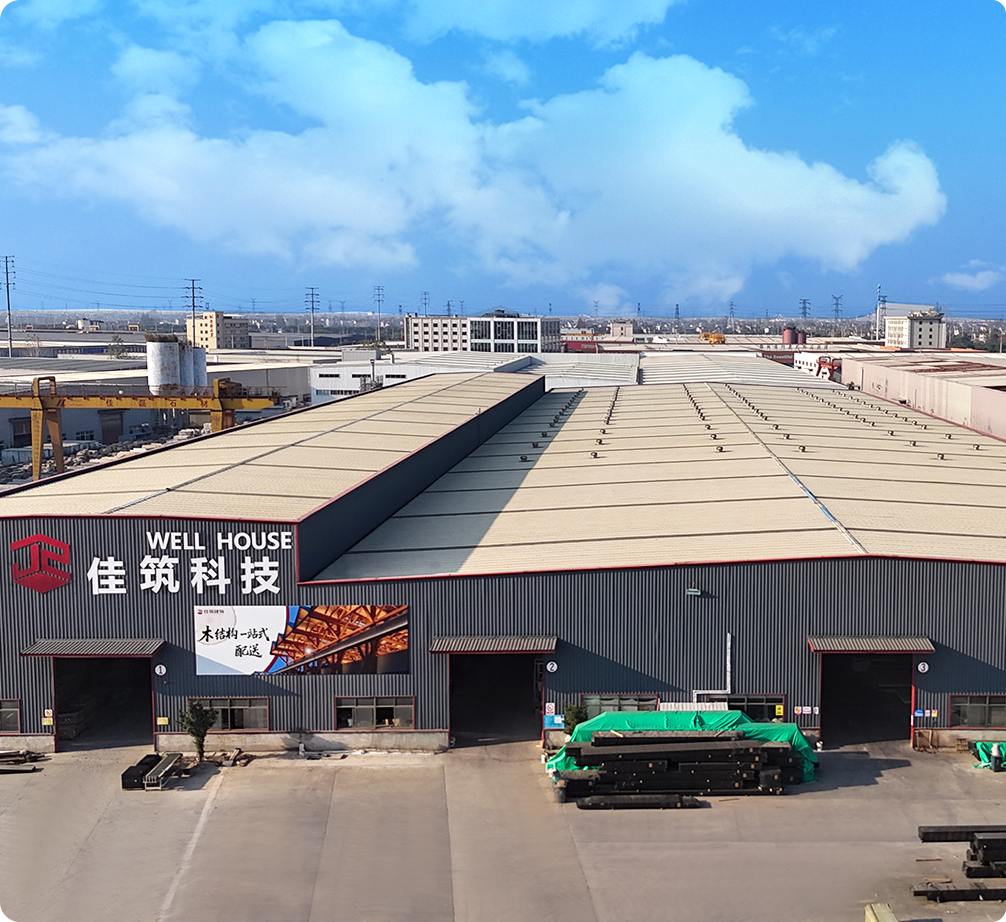
At the same time, architectural flexibility must be grounded in production reality. Design ambitions are meaningful only when manufacturing systems can translate concepts into consistent, high-performance building components. Nantong Wellhouse Architectural Technology Co., Ltd., operating under green building and sustainable development principles, integrates research, design, production, and construction into a unified process. With expertise in glued laminated timber (glulam), solid wood wall panels, and Cross-Laminated Timber (CLT), and with a monthly production capacity reaching 2,000 cubic meters, the company provides the industrial foundation that makes architectural flexibility reliable and scalable. Through a highly mechanized and standardized factory environment, design customization becomes both feasible and repeatable. This section explores the design flexibility and architectural applications of D-Log Siding in depth. We examine how profile customization, material engineering, surface treatments, modular coordination, structural integration, and stylistic adaptation enable D-Log Siding to serve diverse building types such as villas, large-scale venues, public buildings, and infrastructure projects including timber bridges. We also analyze how full-cycle service models—from architectural design and budgeting to manufacturing and installation—support creative freedom without sacrificing technical rigor.
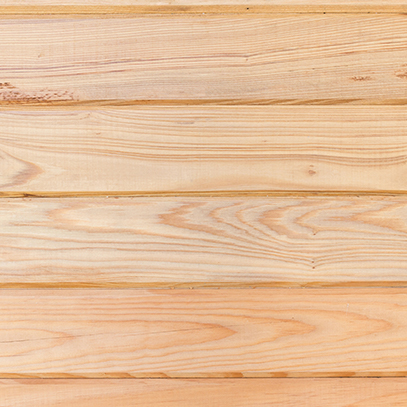
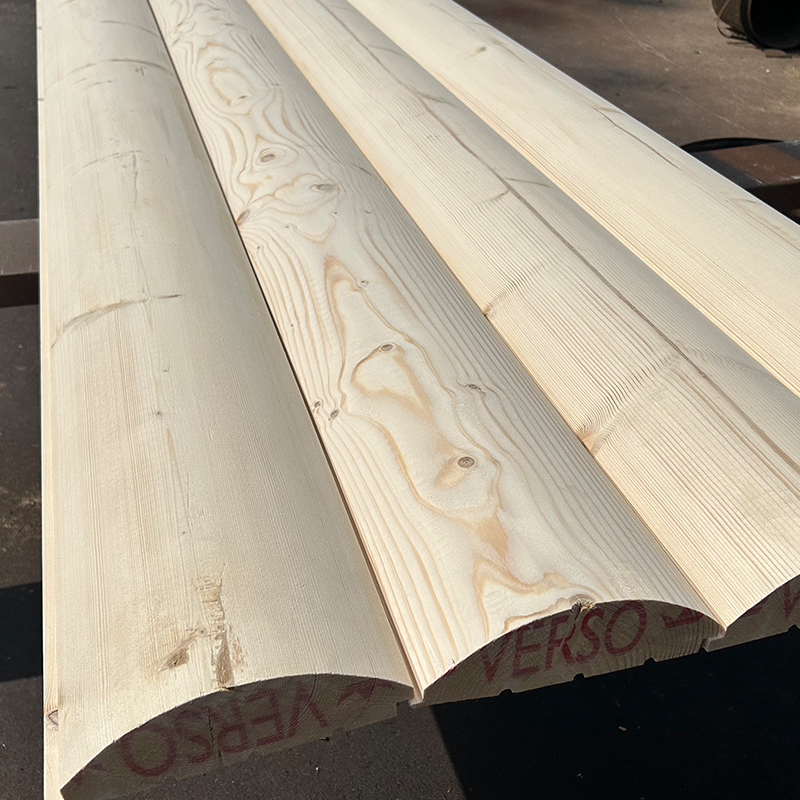
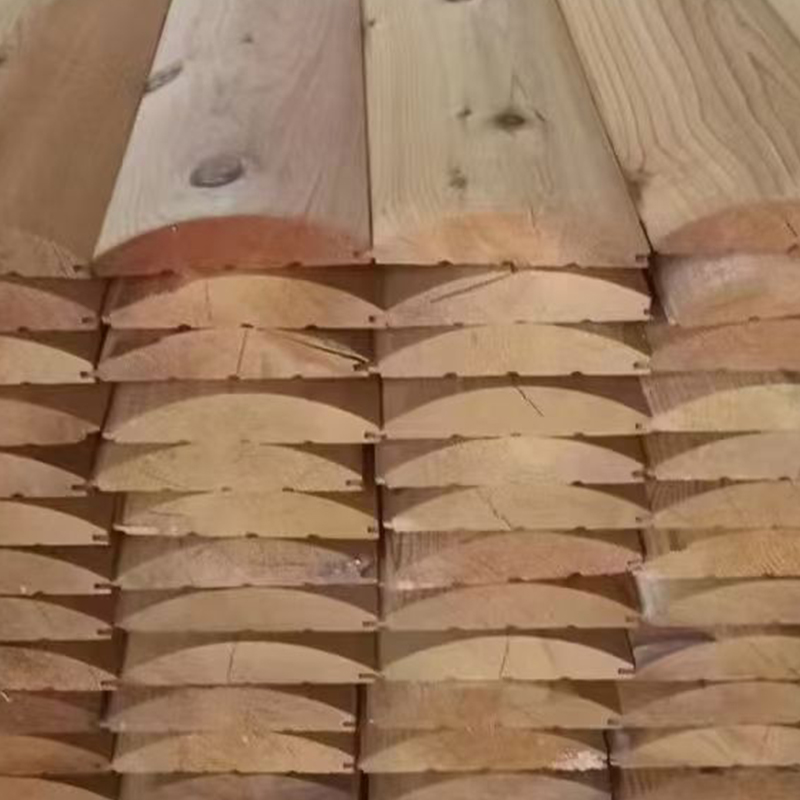
Profile geometry defines how light, shadow, and texture interact across a façade. In D-Log Siding, the characteristic semi-cylindrical or rounded exterior is only a starting point. By adjusting curvature radius, depth, thickness, and edge detailing, we can achieve a spectrum of visual effects ranging from bold, rustic massing to refined, minimalist articulation. Larger-radius profiles emphasize horizontality and solidity, reinforcing a sense of permanence and traditional craftsmanship. Smaller-radius or flatter profiles produce a more contemporary appearance, allowing the façade to read as a continuous surface rather than a stack of individual logs. Variations in profile depth influence shadow patterns, enabling designers to create dynamic elevations that change with sunlight conditions. Nantong Wellhouse Architectural Technology Co., Ltd. supports this level of geometric customization through advanced manufacturing processes rooted in glulam and precision timber engineering. The company’s mature production system allows for tight dimensional tolerances, ensuring that customized profiles maintain structural integrity and installation compatibility.
Beyond individual profile geometry, the overall modular system of D-Log Siding plays a critical role in architectural planning. Module height, length, and joint spacing determine how façades align with floor plates, window openings, and structural grids. Custom module dimensions enable seamless integration with other timber systems such as solid wood wall panels and CLT structures. For residential villas, module dimensions can be tailored to optimize interior planning and exterior rhythm. For large-scale venues, standardized modules support efficient fabrication and rapid on-site assembly. In both cases, the capacity to coordinate siding modules with structural systems ensures that architectural expression and construction logic reinforce each other rather than compete. Because Nantong Wellhouse Architectural Technology Co., Ltd. offers integrated services encompassing architectural design, production, and installation, module coordination becomes a collaborative design process rather than an afterthought. Architectural concepts are developed in parallel with manufacturing strategies, reducing design compromise and enhancing overall project coherence.
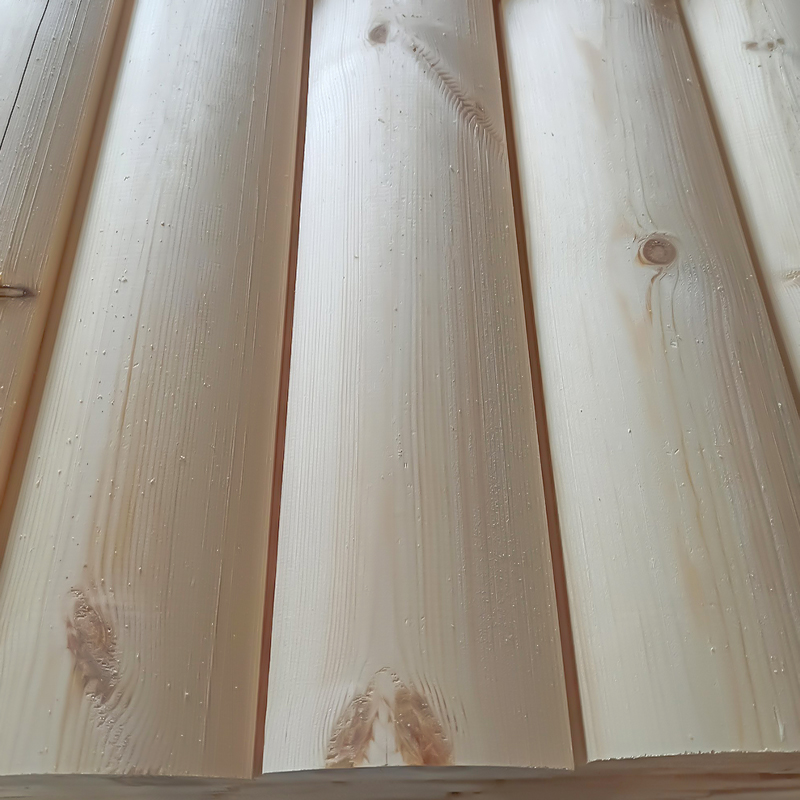
Surface texture is one of the most powerful design variables in D-Log Siding. It determines tactile experience, visual depth, and the way materials age over time. Smooth-planed finishes communicate precision and modernity, while brushed, sandblasted, or hand-scraped textures evoke craftsmanship and organic authenticity. By selecting specific surface treatments, we can align D-Log Siding with diverse architectural narratives. A contemporary cultural center may benefit from finely finished surfaces that reflect light evenly and emphasize clean lines. A mountain lodge or rural villa may call for pronounced grain and tactile roughness that highlight the natural character of wood. The ability to control surface treatments is closely linked to manufacturing capabilities. Nantong Wellhouse Architectural Technology Co., Ltd., operating within a highly mechanized and standardized production environment, ensures consistent texture application across large production volumes. This consistency is essential for maintaining design integrity in projects that require hundreds or thousands of linear meters of siding.
Color is another critical dimension of design flexibility. D-Log Siding can be delivered in natural wood tones, stained finishes, or advanced protective coatings that enhance durability while maintaining aesthetic quality. Color selection allows us to respond to environmental context, cultural symbolism, and branding requirements. In residential architecture, warm natural tones often reinforce the connection between building and landscape. In commercial or public projects, darker or more neutral finishes may be preferred to convey formality, stability, or institutional identity. Protective coatings also play a functional role, offering resistance to ultraviolet radiation, moisture, and biological degradation. Nantong Wellhouse Architectural Technology Co., Ltd. integrates finishing processes into its production workflow, ensuring that aesthetic treatments align with structural performance requirements. This approach allows D-Log Siding to retain visual quality throughout its service life, supporting long-term architectural value.
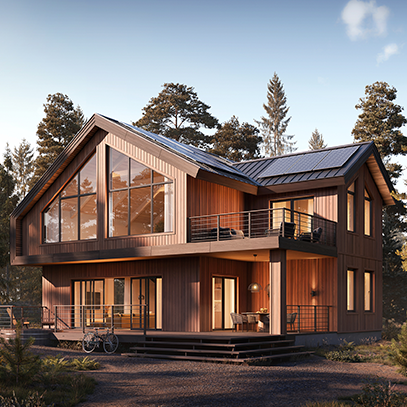
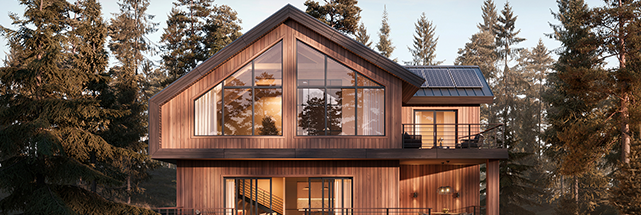
D-Log Siding is inherently associated with traditional log construction, making it a natural fit for vernacular architecture that seeks to preserve regional identity. In alpine regions, forested landscapes, and rural settlements, D-Log Siding can replicate the visual language of historic timber buildings while incorporating modern performance standards. For heritage-inspired villas, lodges, and eco-resorts, the use of D-Log Siding allows us to respect cultural continuity without sacrificing energy efficiency or structural reliability. Engineered wood technologies such as glulam and CLT, which form the technical foundation of many D-Log Siding systems, provide enhanced stability and precision compared to traditional solid logs. By combining traditional aesthetics with contemporary engineering, Nantong Wellhouse Architectural Technology Co., Ltd. enables architectural projects that honor cultural context while meeting modern regulatory and performance expectations.
At the opposite end of the stylistic spectrum, D-Log Siding can be adapted to minimalist and modernist architectural languages. When profiles are refined, joints minimized, and finishes simplified, D-Log Siding transforms from a rustic material into a sleek architectural surface. In contemporary villas, cultural centers, and corporate buildings, D-Log Siding can function as a warm counterpoint to glass, steel, and concrete. The inherent texture of wood introduces human scale and environmental resonance into otherwise abstract forms. Carefully calibrated profile dimensions and surface finishes allow us to achieve visual simplicity without material monotony. Because Nantong Wellhouse Architectural Technology Co., Ltd. offers architectural design and budget estimation as part of its integrated service model, minimalist design intentions can be translated into cost-effective manufacturing strategies without compromising conceptual clarity.
Many architectural projects occupy the space between tradition and modernity. In such cases, D-Log Siding supports hybrid design strategies that blend local identity with contemporary form-making. For example, a public building in a historic district may use D-Log Siding to echo traditional materials while adopting modern massing and spatial organization. This adaptability is particularly valuable in urban renewal projects, eco-tourism developments, and cultural institutions where contextual sensitivity is essential. By adjusting profile geometry, texture, and color, D-Log Siding can be tuned to resonate with surrounding buildings while maintaining a distinct architectural identity.
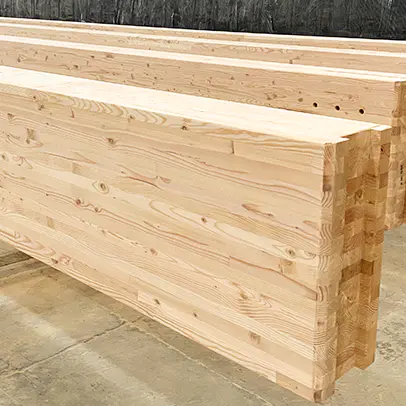
One of the most significant advantages of D-Log Siding is its compatibility with glulam structural systems. Glulam provides long-span capability, high load-bearing capacity, and dimensional stability, making it ideal for large-scale timber architecture. When D-Log Siding is coordinated with glulam frames, the building envelope becomes an extension of the structural logic rather than a superficial layer. This integration enables expressive structural articulation. Exposed glulam beams can align with horizontal siding courses, reinforcing visual continuity between structure and façade. In large venues such as exhibition halls, sports facilities, and assembly spaces, this synergy enhances both aesthetics and construction efficiency. Nantong Wellhouse Architectural Technology Co., Ltd. specializes in glulam production and timber structure engineering, allowing seamless coordination between D-Log Siding and primary structural systems. The company’s full-cycle service model ensures that design, manufacturing, and installation processes are technically aligned.
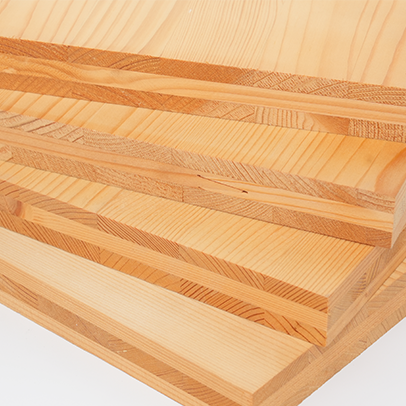
D-Log Siding also integrates effectively with CLT and solid wood wall panels, which are increasingly used in modern timber construction. CLT provides planar structural elements with high stiffness and fire resistance, while solid wood wall panels offer prefabricated enclosure systems with excellent thermal performance. When D-Log Siding is applied as an exterior layer over these systems, it enhances architectural expression without compromising structural performance. This layered approach allows us to separate aesthetic articulation from primary load-bearing functions, enabling greater design freedom. Nantong Wellhouse Architectural Technology Co., Ltd. produces both CLT and solid wood wall panels, facilitating coordinated system design. This integration supports projects that require both architectural distinction and high-performance building envelopes.


 English
 한국어
한국어 Español